











World Brain Day 2026: Global Leaders Call for Urgent Action to Address the 3.4 Billion People Living with Neurological Conditions
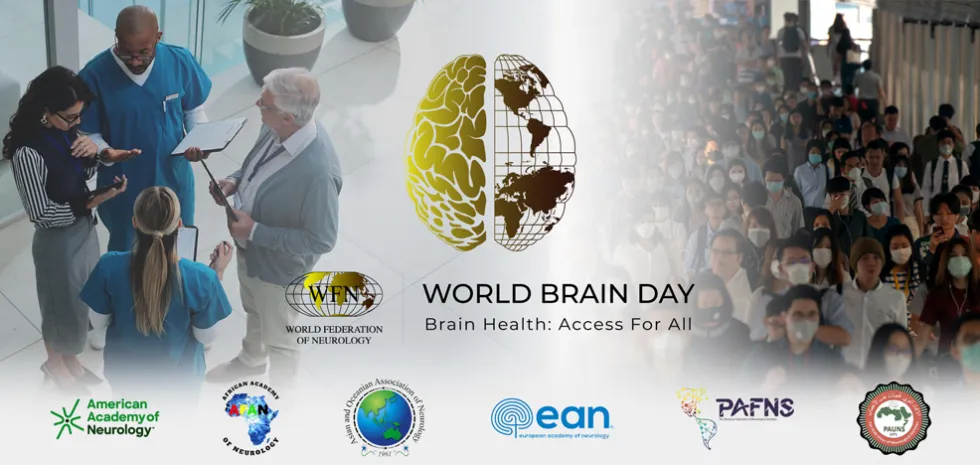
LONDON, 23 June 2026 — The World Federation of Neurology (WFN) today launches World Brain Day 2026, centered on the theme “Brain Health: Access for All.” This global initiative addresses a critical disparity: while neuroscientific progress is accelerating, over 3.4 billion people—more than 40% of the global population—currently live with neurological conditions. This makes brain disorders the leading cause of disability worldwide.
“World Brain Day 2026 focuses on one of the defining challenges of our time: making brain health accessible to everyone, everywhere,” says Professor Tissa Wijeratne, OAM, MD, PhD, Chair of World Brain Day 2026. “The message is simple but urgent: access delayed is potentially access denied.”
The Growing Global Burden
Despite medical advances, access to neurological care remains fragmented. In many regions, there is fewer than one neurologist per million people. In under-resourced communities, patients often face a five-year delay between the onset of symptoms and a formal diagnosis from a specialist.
"Access to brain health is a profound global issue. While the disparity with low-income countries remains staggering, with 227 times fewer neurologists per capita, even in high-income countries, cost, primary care and specialist shortages, and overburdened systems prevent billions from receiving essential care. Evidence shows that addressing lifestyle and modifiable risk factors can optimize brain health, meaning prevention, public empowerment, and stronger local policy and resources can make a meaningful difference everywhere," explains Professor David Dodick, MD, Co-Chair of World Brain Day 2026.
A Social and Economic Imperative
Brain health is a fundamental social and economic priority. Cognitive health is essential for learning, innovation, professional productivity, and interpersonal connection. Conversely, neglecting brain health carries far-reaching consequences, limiting societal participation and placing significant pressure on community resources.
Critical barriers—including language gaps and cultural differences—frequently obstruct access to essential services. These systemic challenges often delay clinical intervention, preventing individuals from receiving timely support.
“Investing in brain health means investing in people,” says Professor Steven Lewis, MD, President of the World Federation of Neurology. “It helps individuals reach their potential and supports healthier, more resilient societies.”
The Five Pillars of World Brain Day 2026
The campaign focuses on five core principles:
- Equity: Brain health is for everyone, regardless of geography, income, or background.
- Early Intervention: Faster diagnosis and access to care prevent disability and protect independence.
- Prevention: Many disorders can be delayed or prevented through cardiovascular risk control, physical activity, and sleep hygiene.
- Local Access: Moving care closer to home by strengthening primary care and community-based services.
- Global Action: Turning awareness into policy changes and measurable healthcare improvements.
Strategic Action Areas
The World Federation of Neurology (WFN), in collaboration with its six regional organizations, identifies the following priorities:
- Enhancing Brain Health Visibility
Integrating brain health into public discourse to reduce stigma and improve the general understanding of neurological conditions. - Advocating for Local Capability
Having the right resources in the right place at the right time means ensuring resources are available at the community level. By advocating for the empowerment of primary care and local health workers, the campaign seeks to promote the decentralization of care beyond specialist centers. - Protecting brain health across the life course
Promoting evidence-based actions—from early childhood nutrition and vaccinations to lifestyle choices in old age, as well as healthy environment—to protect brain health before illness occurs. - Closing the neurological care gap
Advocating for timely, affordable, and continuous care, including access to essential medicines and assistive technologies. - Turning Advocacy into Policy
Strengthening leadership and accountability to ensure brain health is incorporated into universal health coverage and inclusive research frameworks.
Progress depends on empowering communities and ensuring scientific advances reach all people. The World Federation of Neurology, together with its six regional organizations representing Africa, the Eastern Mediterranean, Europe, Pan America, Asia Oceania, and the Pan Arab region, invites stakeholders worldwide to join this global campaign.
#WorldBrainDay2026 #BrainHealthForAll
About the World Federation of Neurology
With support from its 126 national neurological Member Societies, the World Federation of Neurology fosters quality neurology and brain health worldwide by promoting neurological education and training, with an emphasis on under-resourced areas of the world.
As a non-state actor in official relations, WFN supports the World Health Organization (WHO) efforts to give everyone an equal chance to live a healthy life. With Member Societies around the globe, WFN unites the world's neurologists to ensure quality neurology and advocate for people to have better brain health. Learn more about the World Federation of Neurology at wfneurology.org.
Media ContactJade Roberts, World Brain Day Project Manager |
World Brain Day Media Tool Kit |
The WFN World Brain Day Webinar will take place on Tuesday 22nd July at 13:00 UK time.
Click here for the webinar time where you are.




Web design by Tribal Systems, built on Zenario