













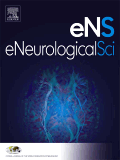
 eNeurologicalSci Vol 43
June 2026
Building confident cohesive stroke response teams: Design, implementation and outcomes of a stroke code simulation training program for interprofessional teams in LMIC
Shafaq Saleem, Ayeesha Kamran Kamal, Namrah Aziz, Selina Hasan, ... Badar Afzal
- Article 100606
- https://doi.org/10.1016/j.ensci.2026.100606
- View PDF
Abstract
This study demonstrates that high-fidelity simulation-based training enhances stroke code management skills among healthcare professionals in LMICs. Implementing structured, team-based simulation programs can improve acute stroke care and patient outcomes, thereby improving and streamlining workflows.
Prognostic value of serial IL-6 and NSE measurements in acute ischemic stroke patients undergoing mechanical thrombectomy
Andrii Netliukh, Andrian Sukhanov, Nana Tchantchaleishvili
- Article 100609
- https://doi.org/10.1016/j.ensci.2026.100609
- View PDF
Abstract
Despite major advances in acute stroke therapy, particularly mechanical thrombectomy (MT) for large-vessel occlusion, predicting outcomes in acute ischemic stroke (AIS) remains challenging. Secondary injury mechanisms such as neuroinflammation and neuronal damage contribute substantially to poor recovery, yet are insufficiently captured by clinical and imaging models alone. Interleukin-6 (IL-6) and neuron-specific enolase (NSE) represent complementary biomarkers of these processes, but their combined and serial prognostic value in MT-treated patients has not been fully defined.
The role of hyperbaric oxygen therapy for treating spinal cord injury: Mechanisms, considerations, and research outcomes
Haytham Alqasmi, Bashar Jawich, Ryan Jarrah, Sufyan Ibrahim, ... Brian Fiani
- Article 100608
- https://doi.org/10.1016/j.ensci.2026.100608
- View PDF
Abstract
Spinal cord injury (SCI) presents formidable challenges, with current regenerative treatments such as stem cell therapy and spinal stimulation showing inconsistent results in clinical trials. Advances in understanding the pathophysiology of SCI have directed regenerative strategies toward reducing inflammation and promoting angiogenesis. Hyperbaric oxygen therapy (HBOT), typically applied in pulmonary and dermatological contexts, emerges as a promising off-label treatment for SCI. This manuscript examines HBOT's mechanisms, clinical considerations, and outcomes in SCI, emphasizing its potential to enhance oxygenation, stimulate angiogenesis, reduce inflammation, and modify gene expression. Although further research is required to validate its efficacy fully, our analysis indicates that HBOT could significantly improve motor and sensory recovery in SCI patients, positioning it as a valuable therapeutic option.
Appropriateness of oral anticoagulant therapy and associated factors among hospitalized atrial fibrillation patients with the CHA2DS2-VASc score of 1 (beyond sex)
Gebretekle Gebremichael Hailesilase, Gebru Hagos Atsbha, Haylay Araya Gebrezgabiher, Abrahaley Mulu Kidane
- Article 100610
- https://doi.org/10.1016/j.ensci.2026.100610
- View PDF
Abstract
Atrial fibrillation (AF) is the most common cardiac rhythm disturbances associated with increased risks of mortality. Oral anticoagulant (OAC) reduces AF-related strokes. However, the pattern of OAC use among AF patients is unknown in Ethiopia. This study evaluated the appropriateness of OAC therapy and associated factors among hospitalized AF patients.
Nitrous oxide–related neurotoxicity: Clinical features, key investigations, and a proposed diagnostic approach from a single-center cohort
Si Tri Le, Khang Vinh Nguyen, Len Thi Duong, Hung Hoang Dang, ... Umapathi Thirugnanam
- Article 100614
- https://doi.org/10.1016/j.ensci.2026.100614
- Note: PDF download link truncated in source text.
Abstract
Recreational use of nitrous oxide (N2O) is a growing public health concern. Its neurological complications include peripheral neuropathy and posterior column myelopathy. Our study aims to characterize the clinical, laboratory, and radiological features of N2O neurotoxicity, and to explore the clinical relevance of various commonly employed investigations in real-world setting.
Listeria rhombencephalitis in an alcoholic man; A case report and review of literature
Hussain Al-Sadi, Atanu Basu, Medha Panicker, Bhupal Shrestha, Aimee Crawley
- Article 100605
- https://doi.org/10.1016/j.ensci.2026.100605
- View PDF
Abstract
Listeria infections are uncommon in our clinical practice and often overlooked as a differential diagnosis. It is also difficult to uncover due to presentation with a variety of non-specific clinical signs and symptoms, that could mimic other conditions. In our case report, we discuss a rare and challenging case of a middle-aged alcoholic man with Listeriosis affecting the rhombencephalon. He presented with non-specific symptoms, including agitation and confusion, preceded by flu-like illness. These were accompanied by seizures and fever in hospital, as well as intermittently changing neurological deficits. Although his symptoms were put down to alcohol withdrawal initially, the timely identification of Listeria monocytogenes in blood cultures could aid to point towards the correct diagnosis and hence prompt a lifesaving treatment. It was later confirmed with MRI imaging of the brain, showing inflammation around the brainstem. Lumbar puncture results were also alluding to a meningoencephalitis picture. Despite the high mortality rate, our patient survived and was discharged from hospital six weeks after the initial admission. We will compare our case with other case reports from the literature. Finally, the discussion will highlight the importance of considering Listeria when treating possible encephalitis/ meningitis in patients at risk.
Hereditary transthyretin amyloidosis mimicking ALS: First genetically proven case report from Saudi Arabia
Hosna Elshony, Rakan Almuhanna, Khaled O. Albazli, Rabia Muddassir
- Article 100607
- https://doi.org/10.1016/j.ensci.2026.100607
- View PDF
Abstract
Hereditary transthyretin amyloidosis (ATTRv) is a systemic disorder that may mimic motor neuron disease (MND), leading to misdiagnosis and delayed access to disease-modifying therapies.
Fractures beyond spasms: Progressive encephalomyelitis with rigidity and myoclonus associated with GABA-linked bone fragility
Tomoya Shibahara, Junya Kuroda, Hiroshi Nakane, Tetsuro Ago
- Article 100615
- https://doi.org/10.1016/j.ensci.2026.100615
- View PDF
Abstract
Progressive encephalomyelitis with rigidity and myoclonus (PERM) is a rare and severe form of stiff-person spectrum disorders, typically associated with painful spasms, brainstem involvement, and autonomic dysfunction. Previous reports have described fractures as an uncommon but recognized complication of PERM, typically attributed to mechanical stress from recurrent spasms; however, disrupted γ- aminobutyric acid (GABA)ergic signaling may also impair bone metabolism. We report a 53-year-old man with seronegative PERM who developed vertebral and pelvic fractures without trauma during hospitalization. Immunotherapy with intravenous immunoglobulin, methylprednisolone, and rituximab improved neurological symptoms, but spasticity persisted. Bone turnover markers remained persistently elevated and bone healing was delayed even 6 months after the fractures. Introduction of intrathecal baclofen resulted in marked reduction of spasticity, normalization of bone markers, improvement in bone mineral density, and radiographic evidence of fracture healing. This case suggests that impaired GABAergic signaling in PERM may contribute to high-turnover bone metabolism and skeletal fragility, in addition to mechanical stress. Awareness of this potential complication is important, as early initiation of immunotherapy combined with GABA-enhancing therapy may improve both neurological and skeletal outcomes.
Comment on “Prevalence and risk factors of paediatric seizures in COVID-19 infection: A study from Thailand”
Vidya Singaravelu, Amit Singh Pawaiya, Priyanka Aher, Hariharan Srinivasan
- Article 100611
- https://doi.org/10.1016/j.ensci.2026.100611
- View PDF
Response to “Comment on ‘Prevalence and risk factors of paediatric seizures in COVID-19 infection: A study from Thailand’”
Vitchayaporn Emarach Saengow
- Article 100612
- https://doi.org/10.1016/j.ensci.2026.100612
- View PDF




Web design by Tribal Systems