











Source: Dr Espen Dietrichs
Ragnar Stien, MD (1938-2026)
It is with deep sadness that colleagues announce the passing of Dr. Ragnar Stien on October 16, 2026, at the age of 88. Dr. Ragnar Stien, a prominent figure in Norwegian neurology, medical humanities, and international healthcare relief, was a clinician, leader, bibliofile, and humanist, He has left an indelible mark on the medical landscape through his clinical leadership, commitment to medical history, and unwavering advocacy for human dignity in times of conflict.
A Career Dedicated to Neurological Excellence
Born on February 12, 1938, Dr. Stien earned his medical degree (Cand.med.) from the University of Oslo in 1964 and completed his specialization in neurology in 1975. Over the course of his long clinical career, he served as a senior consultant at various institutions, including making significant contributions to epilepsy care as medical director at the National Center for Epilepsy (Spesialsykehuset for epilepsi).
Recognized by his peers for his administrative vision and deep integrity, Dr. Stien served as President of the Norwegian Neurological Association (Norsk nevrologisk forening) from 1989 to 1993 and was an active member of the Board of the Norwegian Medical Association (Legeforeningen) from 1996 to 2003. During his tenure leading Norwegian neurology, he represented his country in establishing the European Federation of Neurological Societies (EFNS), advocating strongly for a democratic structure governed directly by national societies.
Building Neurological Capacity in Africa
Dr. Stien’s commitment to equity in healthcare extended globally through his foundational contributions to African neurology. Recognising the acute shortage of trained neurologists across the African continent, he collaborated closely with the World Federation of Neurology (WFN) and its Africa Initiative to establish local and sustainable specialist training programs.
Serving as a WFN Special Representative, Dr. Stien was instrumental in setting up and accrediting regional neurology training centers, notably in Rabat, Morocco, and Cairo, Egypt. His work helped pioneer post-graduate neurological education tailored to the continent's specific healthcare needs, enabling African physicians to receive advanced training closer to home and strengthening neurological care infrastructure across Sub-Saharan Africa.
Courage in the Field: Service in Sarajevo
Dr. Stien's dedication to medicine extended far beyond hospital wards and academic halls. During the Bosnian War in the 1990s, he volunteered for medical relief missions in war-torn Sarajevo. Equipped with body armor and working under severe wartime conditions, he spearheaded the establishment of a specialized hospital department for patients with spinal cord injuries.
He often reflected on his time in Sarajevo as a profound period of personal and professional growth. It reinforced his conviction regarding the resilience of the human spirit and deepened his insights into how healthcare systems should function under extreme duress.
The Bridge Between Medicine and Culture
Dr. Stien was uniquely celebrated for bridging the gap between clinical neuroscience and the humanities. He believed that to understand the brain, one must also understand art, history, literature, and human nature.
His main cultural contributions include:
- Norske Nevro-Litterære Klubb: Co-founded and actively led the Norwegian Neuro-Literary Club, establishing a forum for exploring the intersections of brain science, history, and the arts.
- Specialised Publications: Contributed to and edited niche medical-humanities forums, including Axonet, dedicated to discussions on neurology, philosophy, and medical heritage.
- Medical History & Writing: Author and co-author of several works, including Hjernen og kulturen (The Brain and Culture), Hjernens leger: historien om de første norske nevrologene (Doctors of the Brain: The History of the First Norwegian Neurologists), and his 2022 memoir Hjernen: kunsten, historien og jeg (The Brain: Art, History, and I).
- Bibliophile and Scholar: An avid book collector and scholar, Dr. Stien served as chairman of the prestigious Bibliofilklubben (Norway's bibliophile society) and was an active member of the Norwegian Shakespeare Society.
Legacy
Described by colleagues as a generous, intellectually towering, and deeply compassionate mentor, Dr. Ragnar Stien viewed medicine not merely as a technical craft, but as a humane art. His life’s work serves as a reminder of the power of broad intellectual curiosity, clinical discipline, and practical empathy.
He is survived by family, friends, and generations of Norwegian neurologists who were inspired by his leadership, writings, and profound commitment to both medicine and culture.
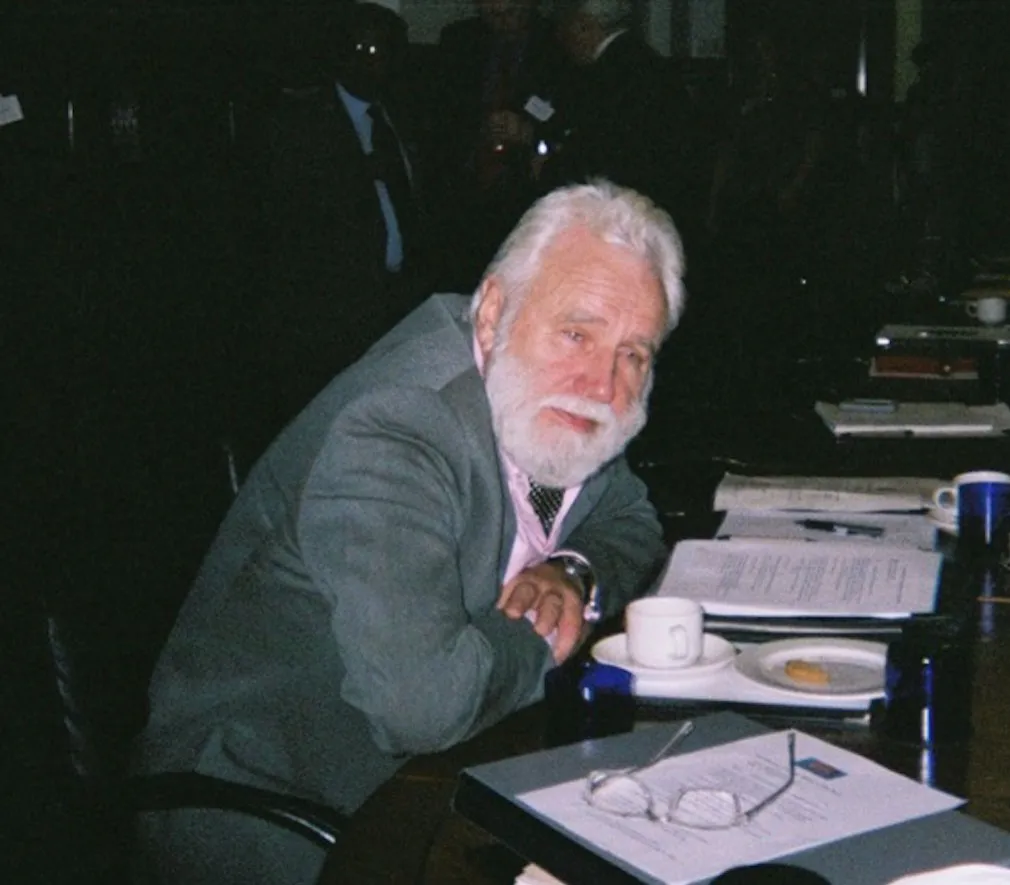
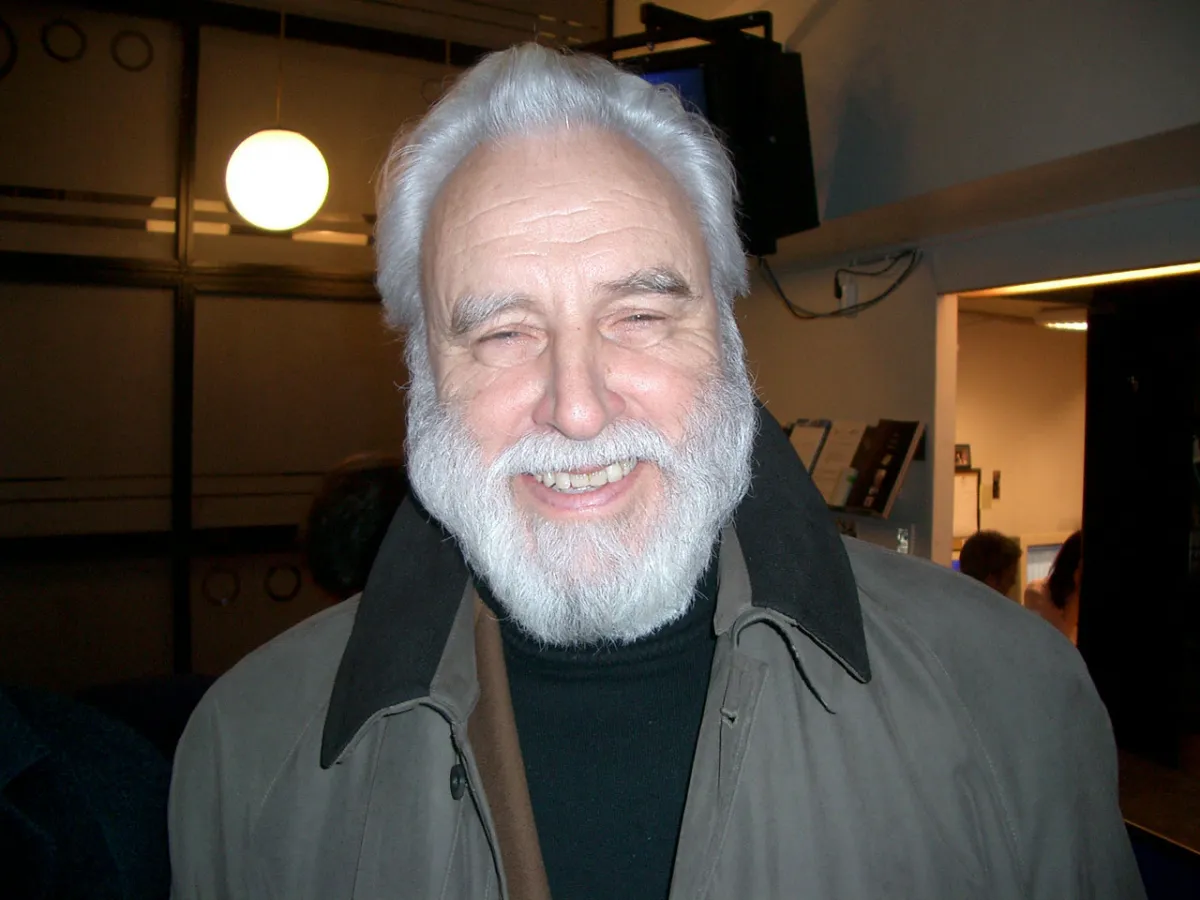
Dr Ragnar Stien at the WFN Africa Project meeting, December 2006 at One Great George Street, London




Web design by Tribal Systems, built on Zenario