














A large systematic review and meta-analysis1 published in the Journal of the Neurological Sciences has found that neuromuscular diseases (NMDs) and related symptoms are common after COVID-19 but generally decrease in prevalence over time.
The analysis reviewed 180 studies published between January 2020 and November 2024, covering more than 15.8 million COVID-19 survivors with at least three months of follow-up. Researchers examined the long-term prevalence of 14 neuromuscular conditions and symptoms, including Guillain-Barré syndrome, neuropathies, myasthenia gravis, sarcopenia, myalgia, and neuropathic pain.
Across all conditions, the pooled prevalence of having at least one NMD or related symptom fell from 36% during the acute phase of infection to 8% at 24 months. Myalgia showed a steady decline over time, while several other conditions, including Guillain-Barré syndrome and other muscle diseases, also trended downward. In contrast, neuropathic pain remained persistently high, decreasing only modestly from 31% in the acute phase to 25% at 12 months.
The authors conclude that while neuromuscular complications are a frequent part of post-COVID-19 sequelae, their long-term trajectories vary by condition, with some symptoms resolving over time and others persisting.
Source: Journal of the Neurological Sciences, 2025; DOI: 10.1016/j.jns.2025.125710
- Pupillo E, Leone MA, Amato A, Bianchi E, Damian MS, Dyck J, Garcia-Azorin D, Giussani G, Guekht A, Koike H, Khadilkar S. Prevalence and trajectories of post-COVID-19 neuromuscular conditions: A systematic-review and meta-analysis. Journal of the Neurological Sciences. 2025 Dec 25:125710.
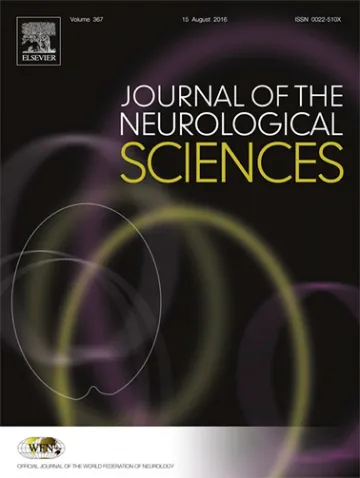
Source: Journal of the Neurological Sciences




Web design by Tribal Systems