

















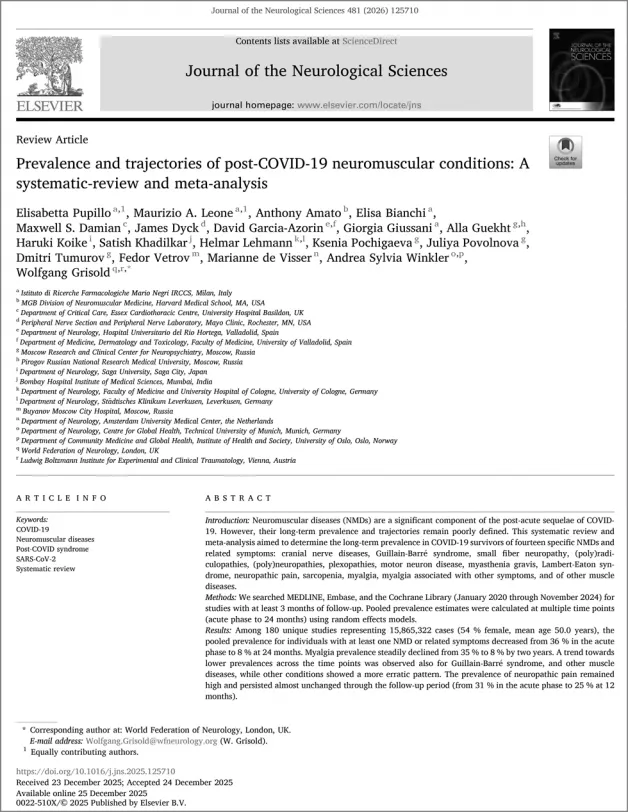
A comprehensive systematic review and meta-analysis published in the Journal of the Neurological Sciences (JNS) reveals that while neuromuscular conditions (NMDs) are common following COVID-19, most symptoms show a significant decline in prevalence over a 24-month period.
The study, led by E. Pupillo and colleagues, analyzed data from 180 unique studies involving over 15.8 million cases (mean age 50.0 years; 54% female). The research tracked 14 specific neuromuscular symptoms and conditions from the acute phase through long-term follow-up.
Key Findings: Trajectories of Recovery
The research identifies a clear downward trend for many post-COVID neurological sequelae, though certain symptoms remain notably persistent.
- Overall Prevalence: The pooled prevalence of individuals experiencing at least one NMD symptom dropped from 36% in the acute phase to 8% at 24 months.
- Myalgia: Muscle pain followed a consistent recovery path, decreasing from 35% during the acute illness to 8% after two years.
- Persistent Neuropathic Pain: In contrast to muscle pain, neuropathic pain demonstrated high stability, affecting 31% in the acute phase and remaining at 25% at the 12-month mark.
- Specific Conditions: While prevalence for most conditions decreased, the researchers noted more "erratic" or stable trajectories for specific disorders, including myasthenia and small fiber neuropathy.
Clinical Implications for Global Neurology
This meta-analysis provides critical data for risk stratification and long-term care planning. By distinguishing between transient symptoms like myalgia and more persistent issues like neuropathic pain, clinicians can better manage patient expectations and prioritize resources for those with stable or chronic conditions.
The authors emphasise that while the general outlook for neuromuscular recovery is positive for most survivors, the persistence of certain symptoms underscores the need for continued long-term clinical monitoring.
Reference
Journal: Journal of the Neurological Sciences
Title: Prevalence and trajectories of post-COVID-19 neuromuscular conditions: A systematic-review and meta-analysis




Web design by Tribal Systems