Social Media Copy
Poster 1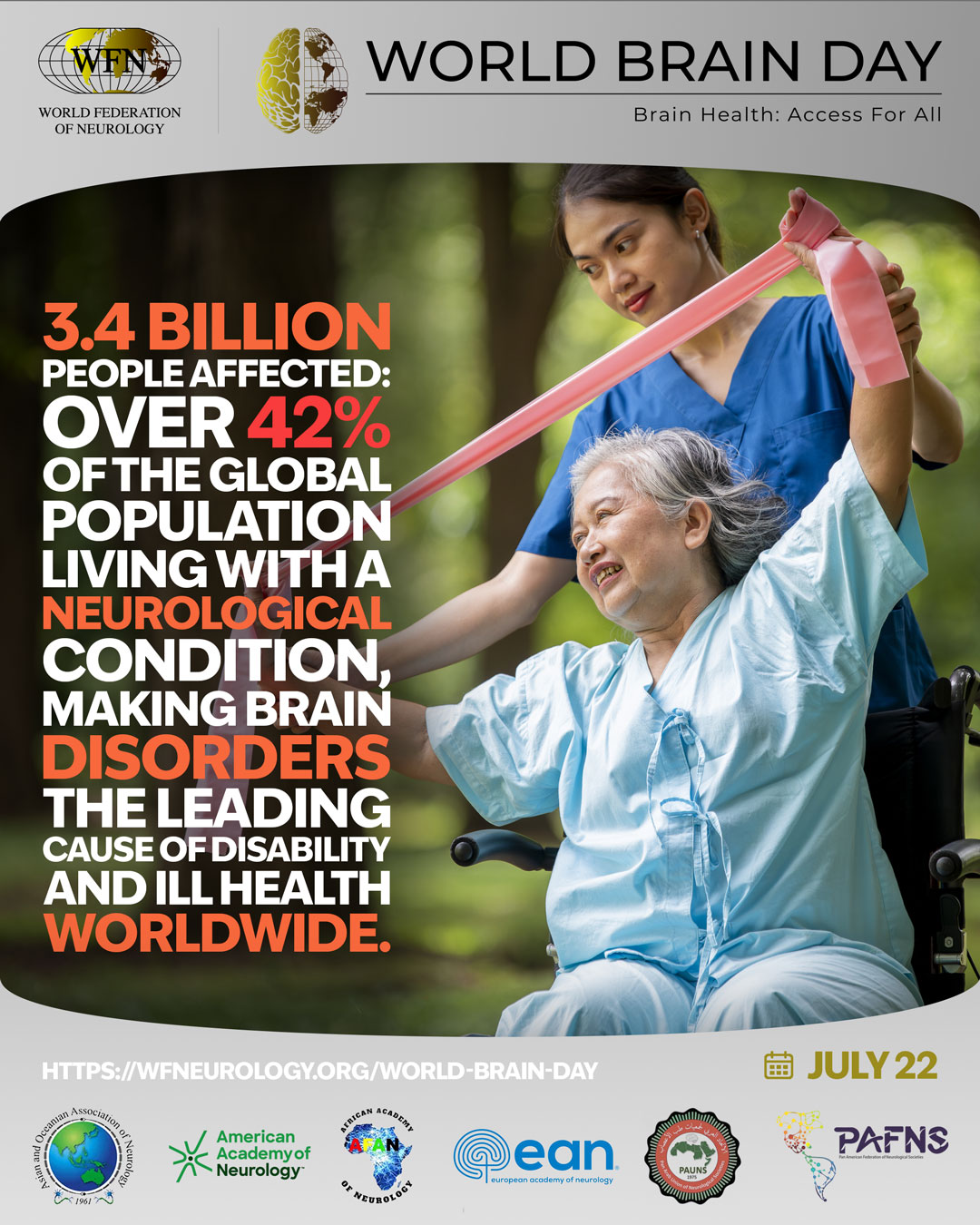
Instagram / X3.4 billion people—over 42% of the world—live with a neurological condition. Brain disorders are now the leading cause of global disability. This World Brain Day (22 July 2026), let's advocate for #AccessForAll. 🧠 Click the link in our bio to register for our free global webinar and join the movement! Learn more: wfneurology.org/world-brain-day #WorldBrainDay #BrainHealth #Neurology LinkedIn / FacebookOver 42% of the global population is currently living with a neurological condition, making brain disorders the leading cause of disability and ill health worldwide. This is a global crisis that demands global action. This World Brain Day, 22 July 2026, the World Federation of Neurology invites you to support the effort toward equitable care. Register for our free global webinar to explore how we can bridge this gap together. ➡️ Register here: wfneurology.org/world-brain-day-webinar-registration ℹ️ Campaign Details: wfneurology.org/world-brain-day #WorldBrainDay #BrainHealth #AccessForAll #Neurology |
Poster 2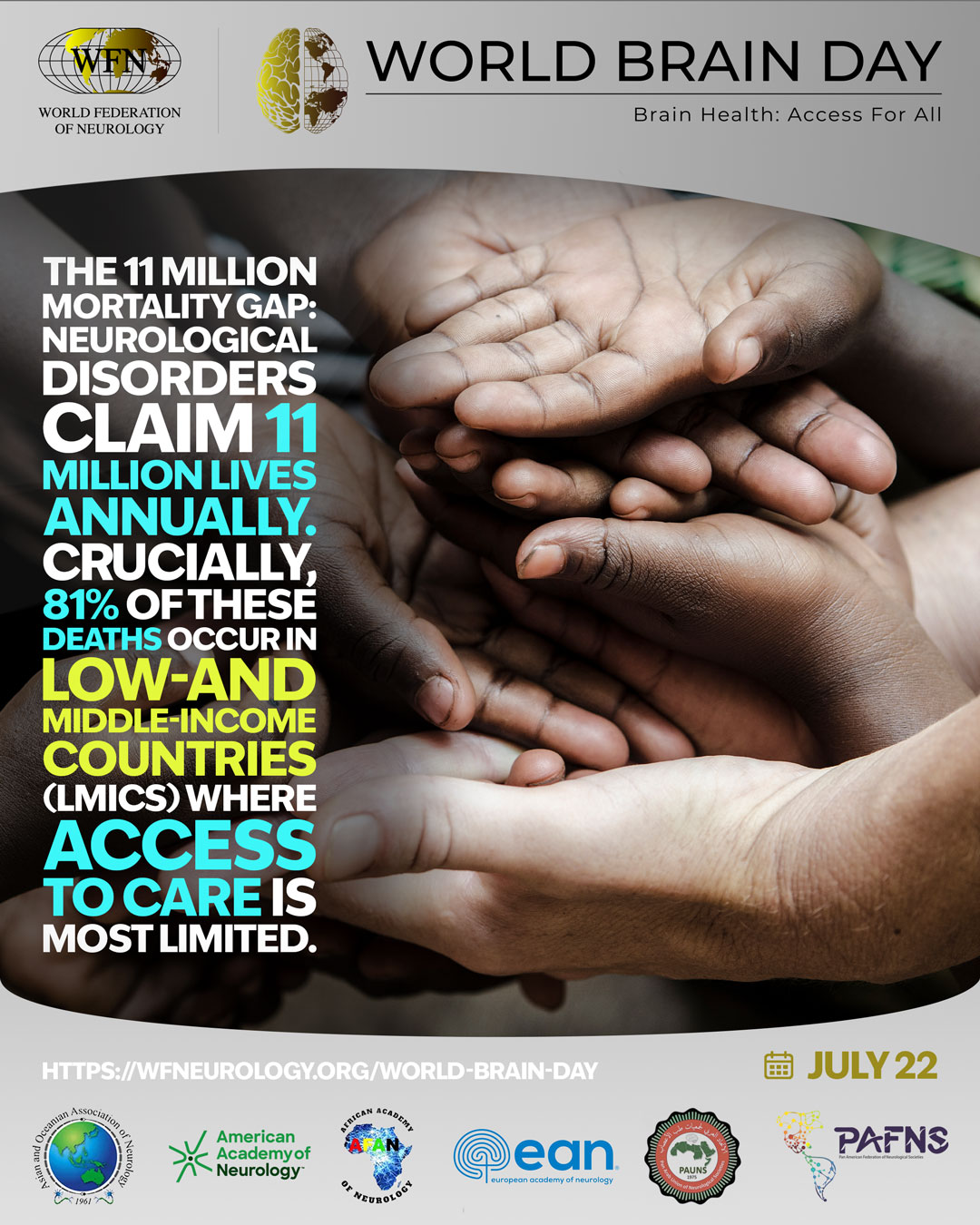
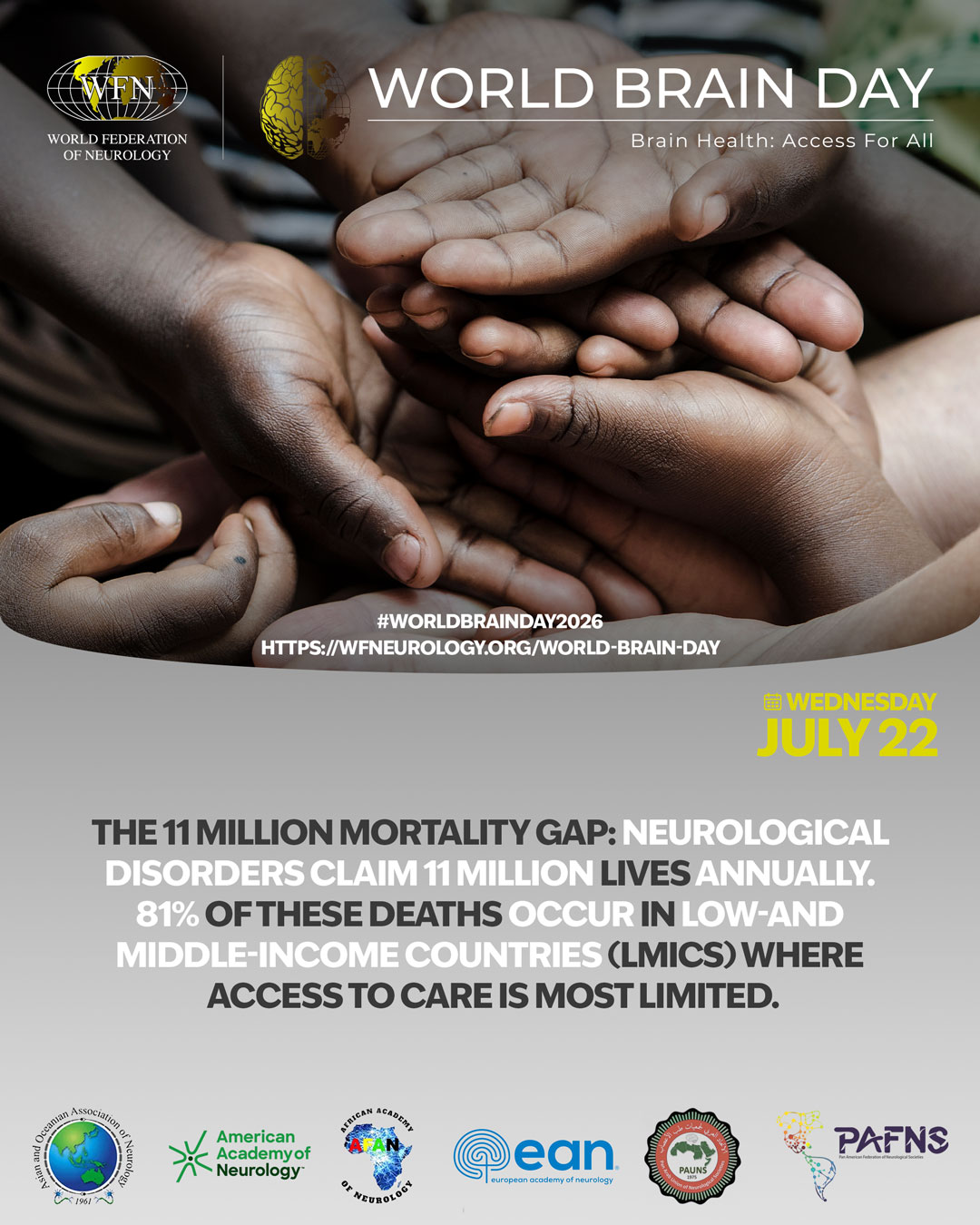
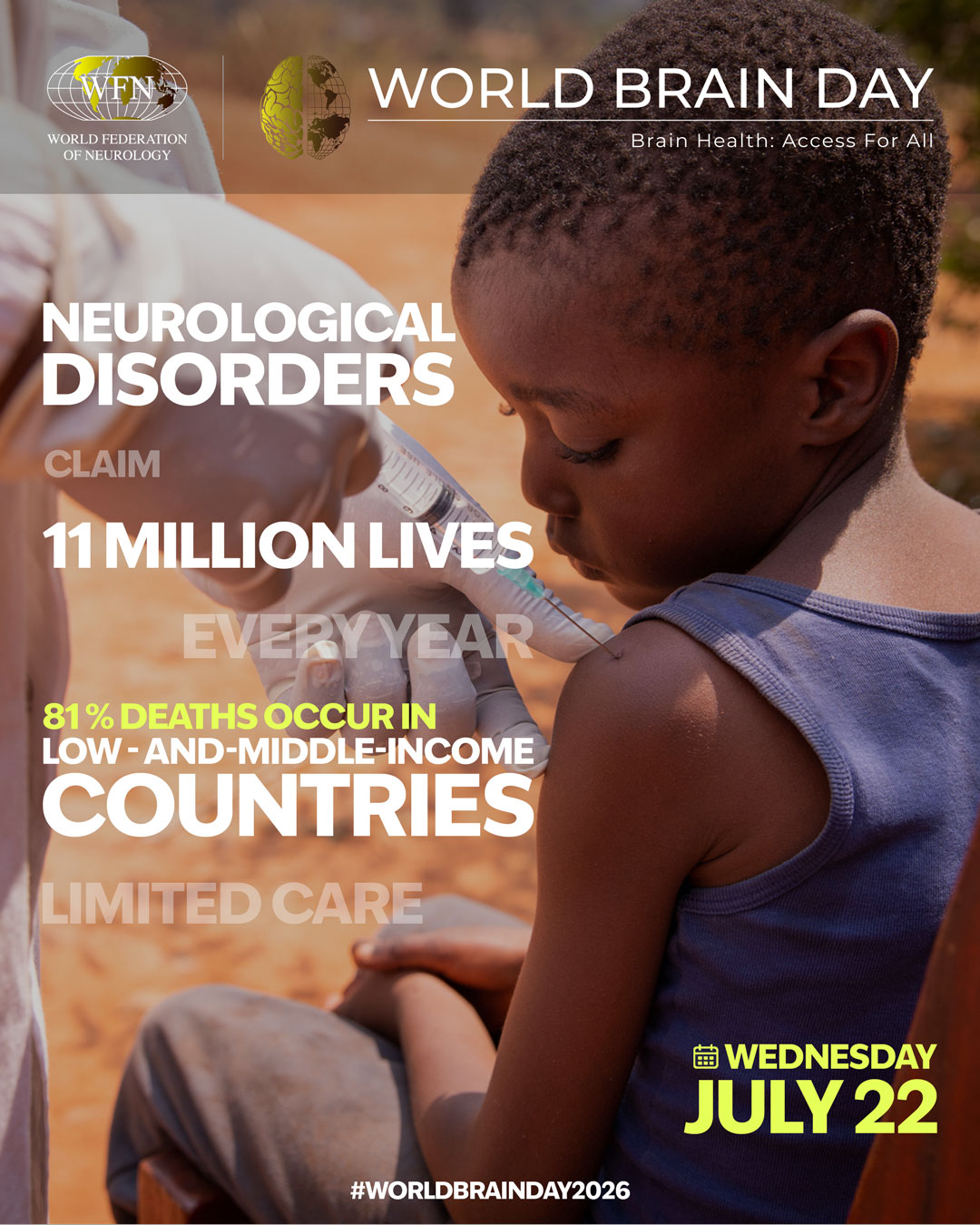
Instagram / X11 million lives are lost to neurological disorders every year— 81% occur in low- and middle-income countries. Where you live should not dictate whether you survive. 🌍 Stand up for #AccessForAll and join us on 22 July 2026. Register for the free World Brain Day webinar and learn more about World Brain Day: wfneurology.org/world-brain-day #WorldBrainDay #HealthcareEquity #GlobalHealth LinkedIn / FacebookNeurological disorders claim 11 million lives annually. Crucially, 81% of these deaths occur in low- and middle-income countries where access to care is most limited. This mortality gap is an urgent reminder that healthcare is a human right, not a geographical privilege. On World Brain Day, 22 July 2026, help us champion Brain Health: Access for All. Register for the official free webinar to find out how global leaders are addressing this significant disparity. ➡️ Register here: wfneurology.org/world-brain-day-webinar-registration ℹ️ Campaign Details: wfneurology.org/world-brain-day #WorldBrainDay #HealthcareEquity #GlobalHealth |
Poster 3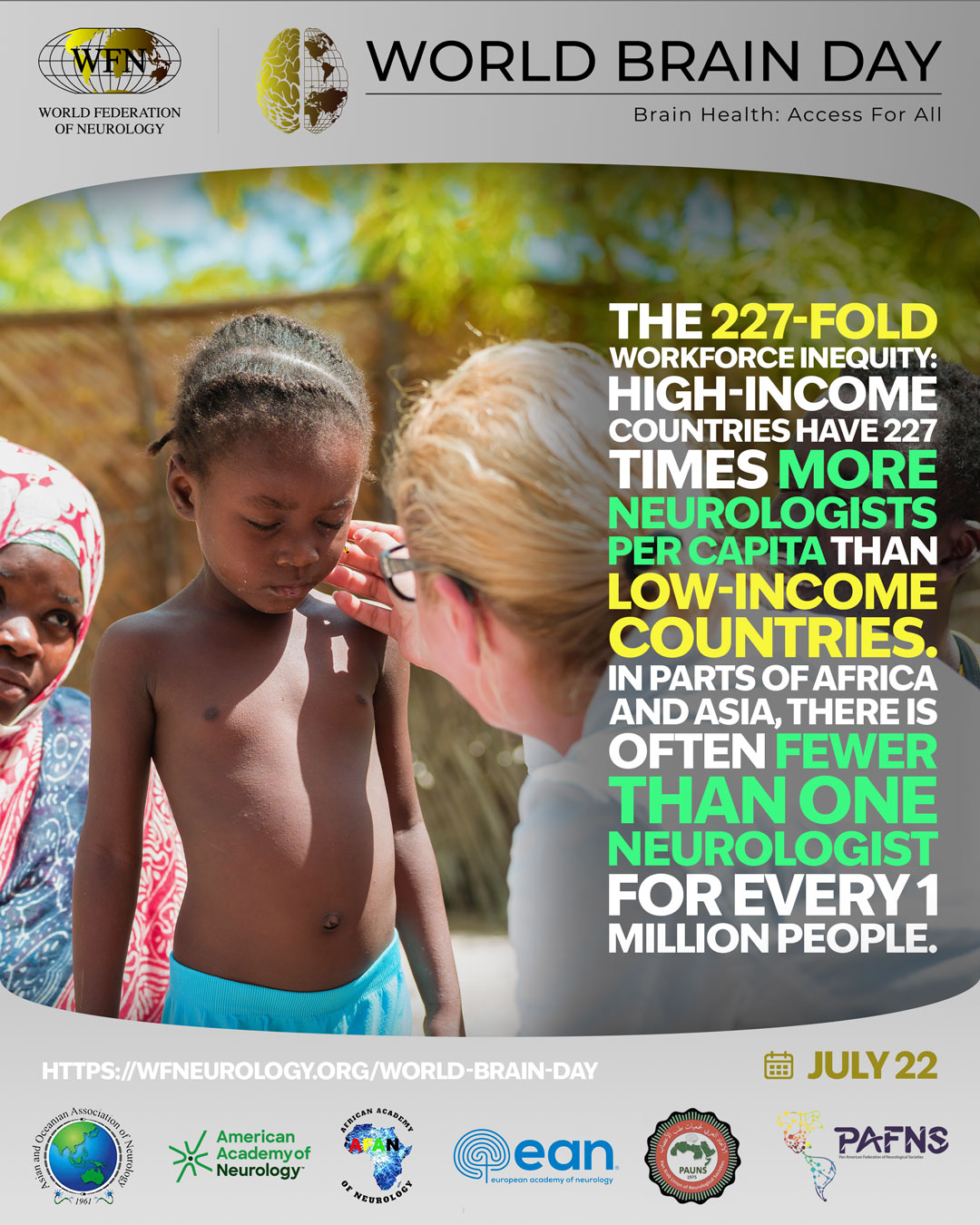
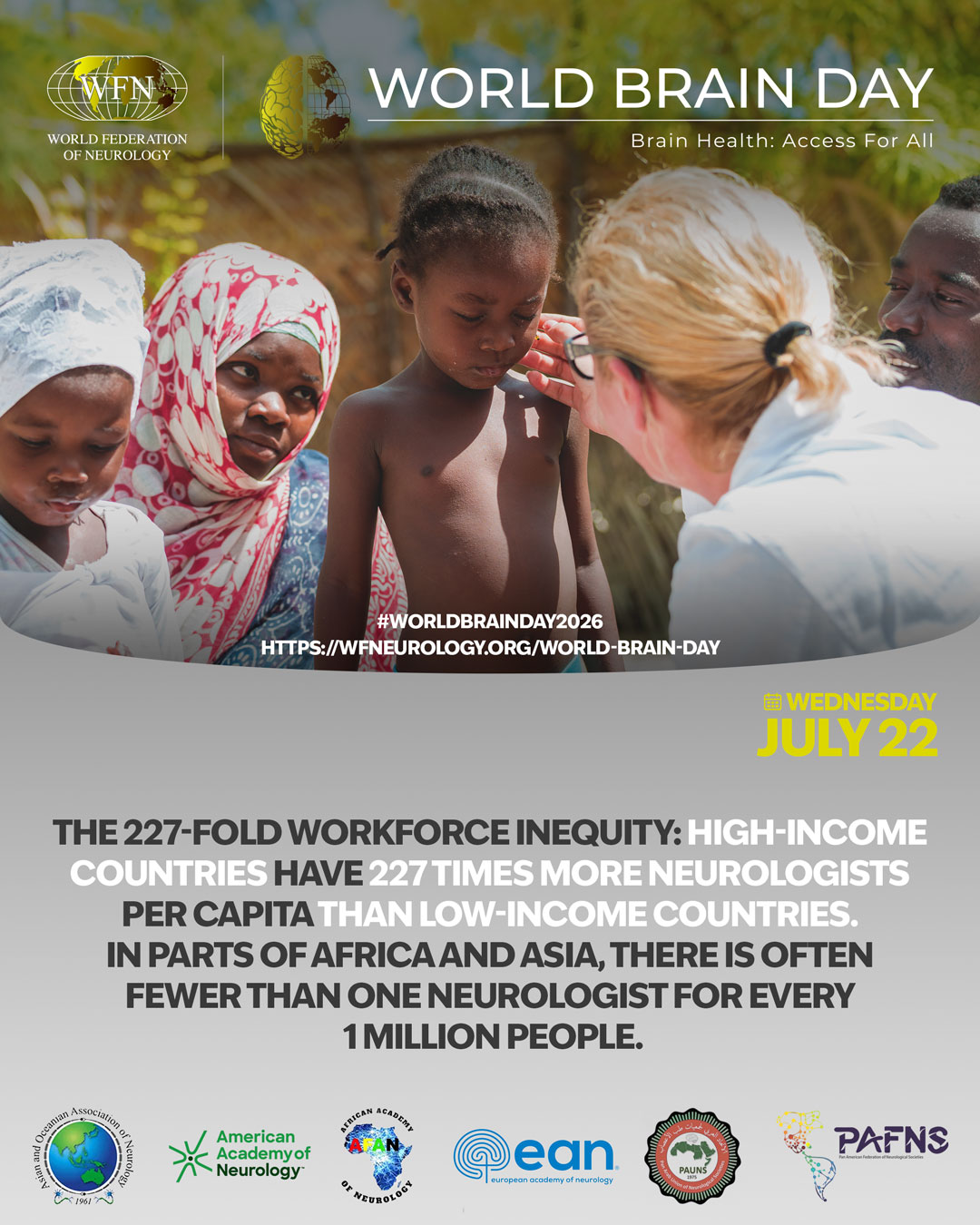
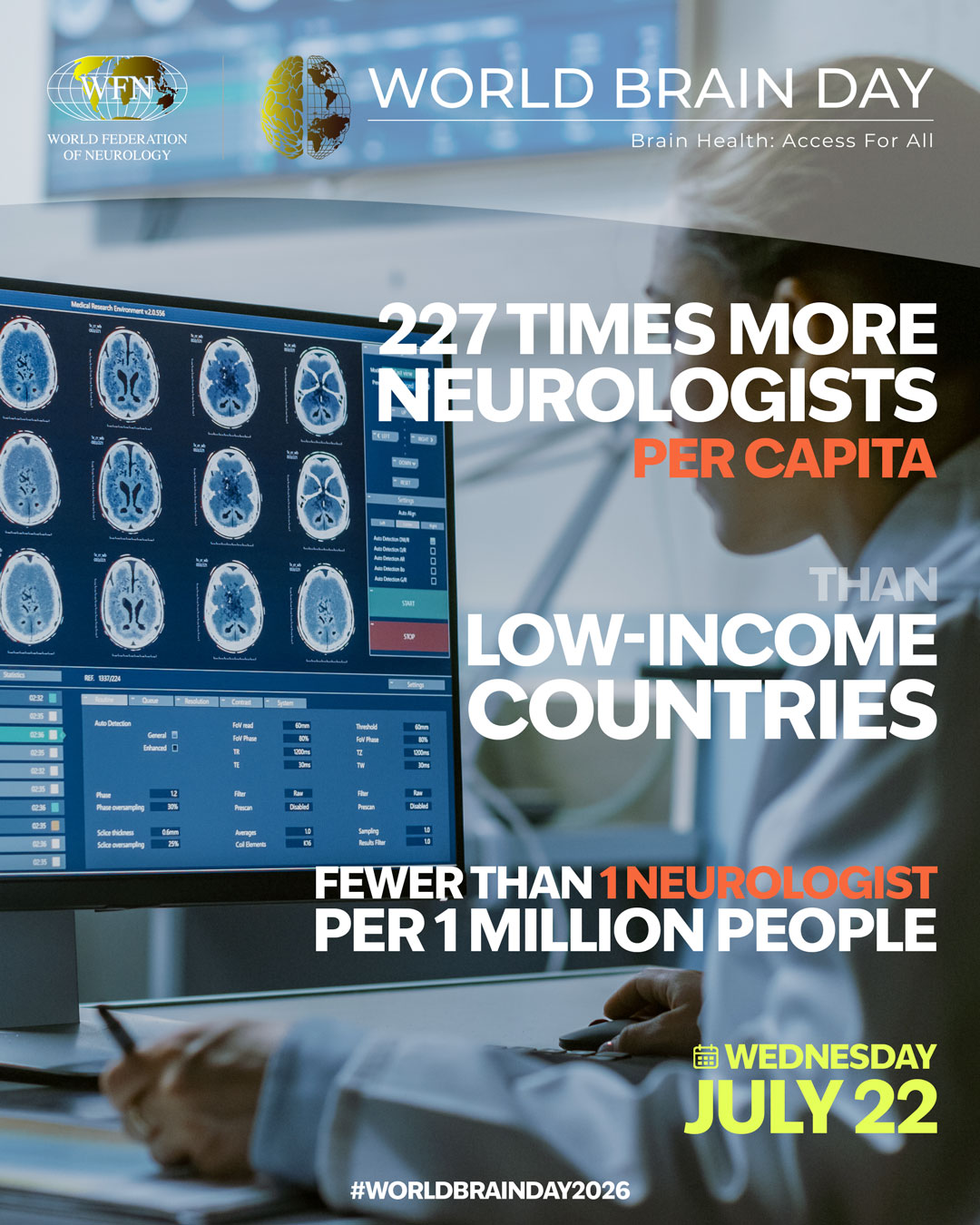
Instagram / XHigh-income nations have 227x more neurologists for their population than low-income countries. In parts of Africa and Asia, it is fewer than 1 specialist per million people. 🛑 Let's close the care gap. Register for the World Brain Day webinar this 22 July 2026 to find out more. wfneurology.org/world-brain-day #WorldBrainDay #AccessForAll #Neurology LinkedIn / FacebookImagine an entire city of a million people with access to just one neurologist. In parts of Africa and Asia, that is the daily reality, highlighting a staggering 227-fold workforce inequity between high- and low-income nations. To achieve Access for All, we must scale medical training and distribution. Join the World Federation of Neurology this World Brain Day on 22 July 2026 for a free global webinar to discuss sustainable solutions. ➡️ Register here: wfneurology.org/world-brain-day-webinar-registration ℹ️ Campaign Details: wfneurology.org/world-brain-day #WorldBrainDay #WorkforceDevelopment #Neurology |
Poster 4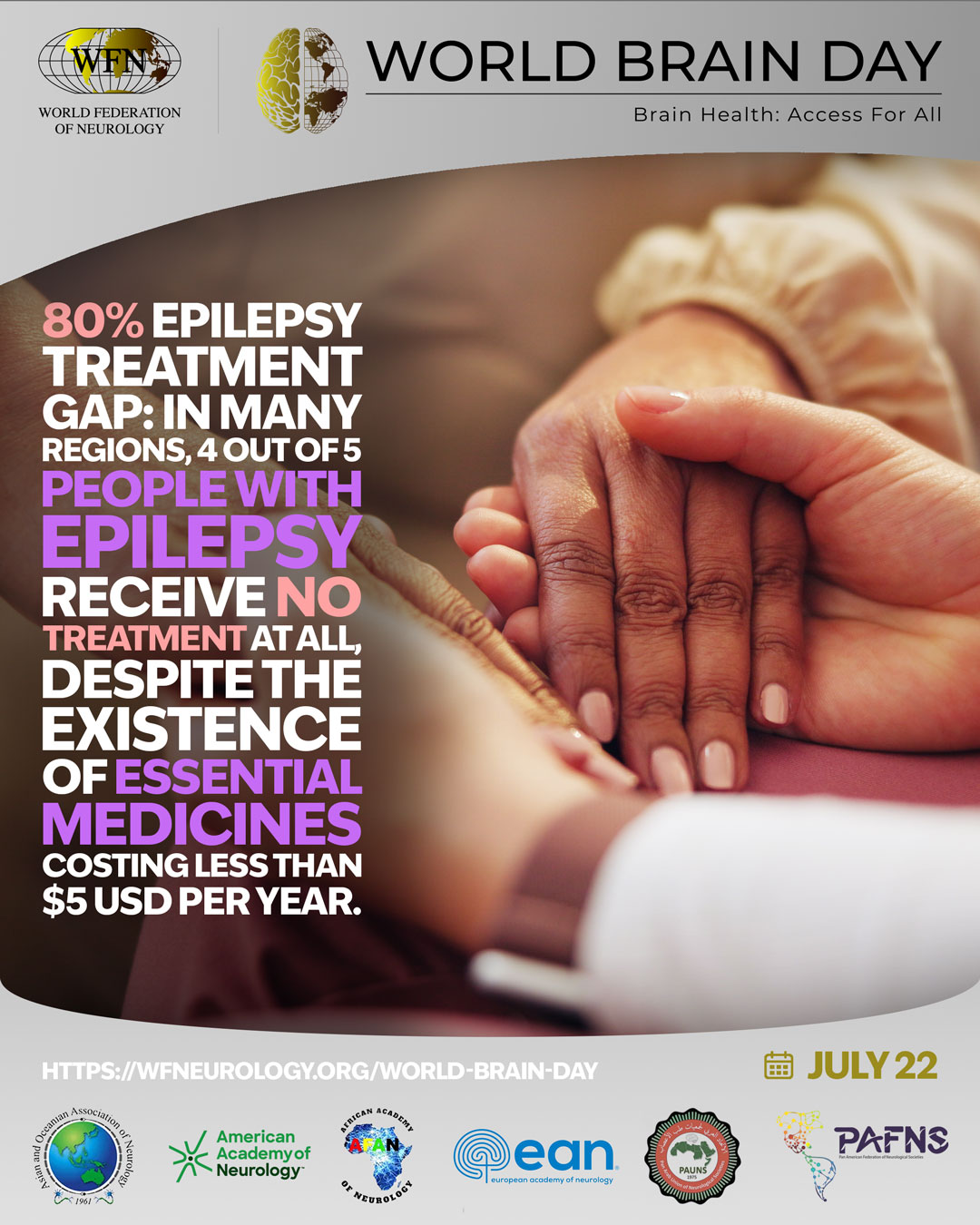
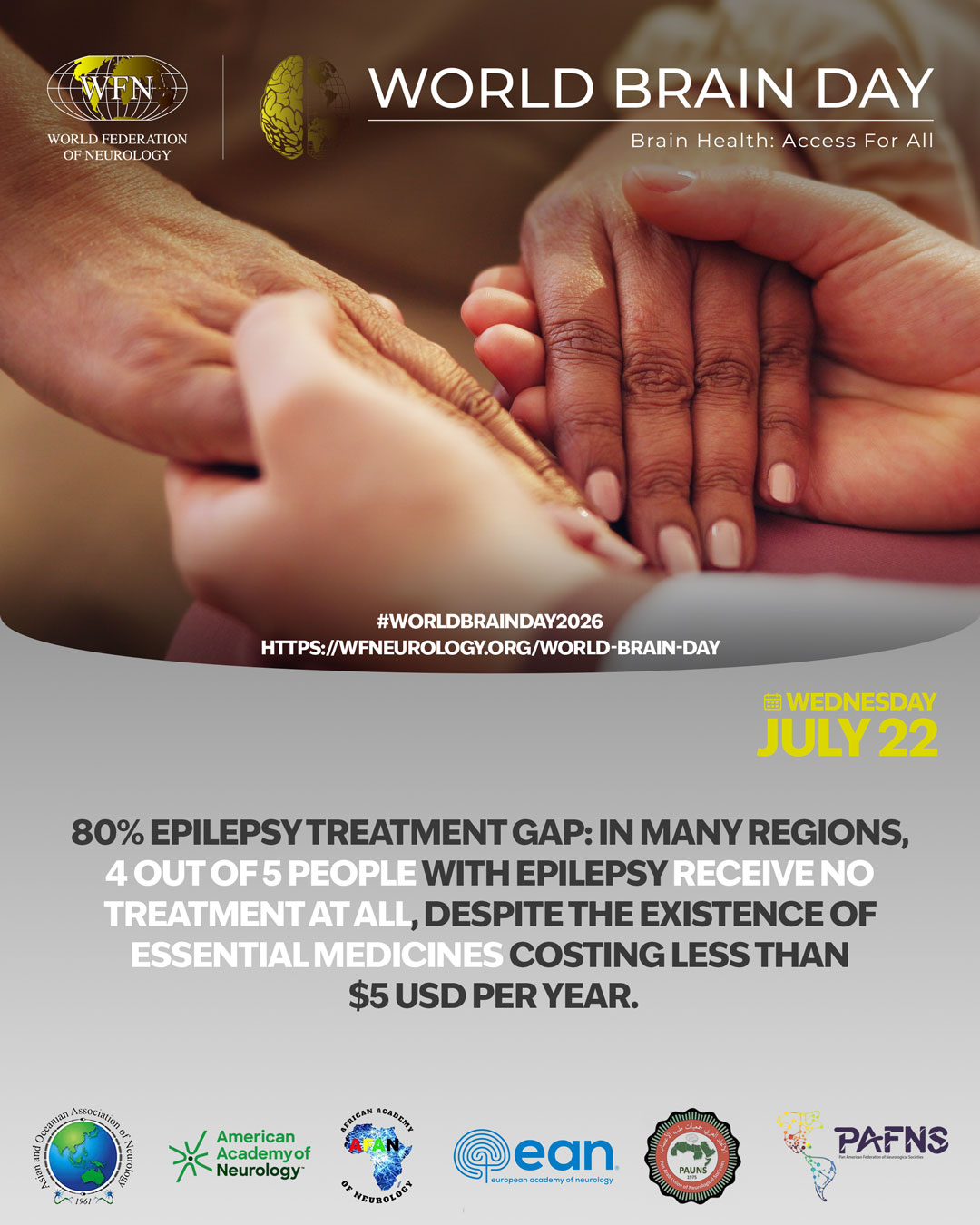
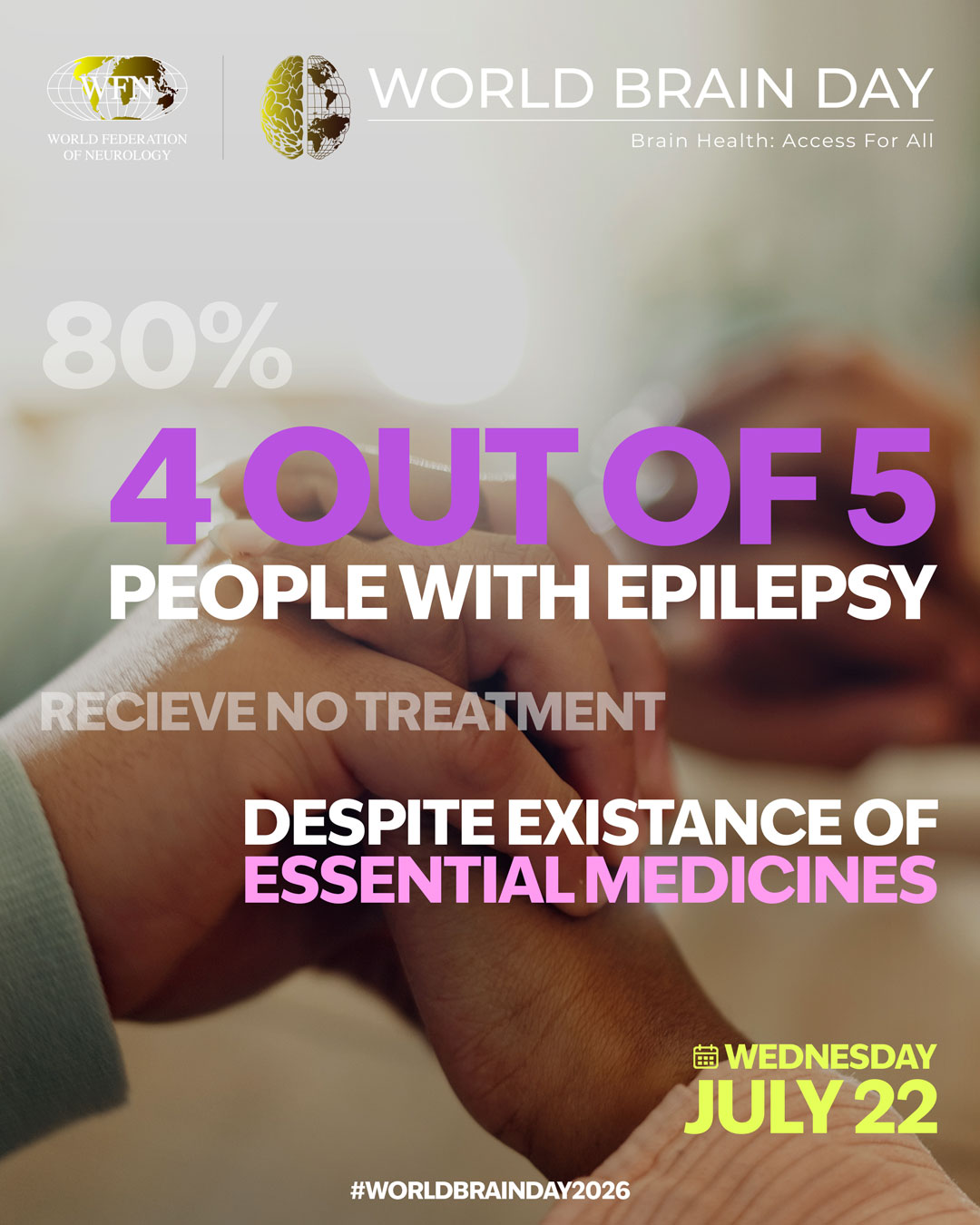
Instagram / XEssential epilepsy medicines cost less than $5 USD a year, yet 4 out of 5 people in under-resourced regions receive no treatment at all. This highlights a significant gap in healthcare access that needs to be addressed. 💊 Save the date: 22 July 2026. Register for the free World Brain Day webinar to learn more. wfneurology.org/world-brain-day #WorldBrainDay #AccessForAll #HealthcareAccess LinkedIn / FacebookEpilepsy medicine is highly effective and can cost less than $5 USD a year. Yet, 80% of people in many regions receive no treatment. On World Brain Day, 22 July 2026, we are highlighting the challenges that prevent affordable medicine from reaching millions of people. Please join us and register for our free global webinar to discover how we can close this treatment gap together. ➡️ Register here: wfneurology.org/world-brain-day-webinar-registration ℹ️ Campaign Details: wfneurology.org/world-brain-day #WorldBrainDay #EpilepsyAwareness #HealthcareAccess |
Poster 5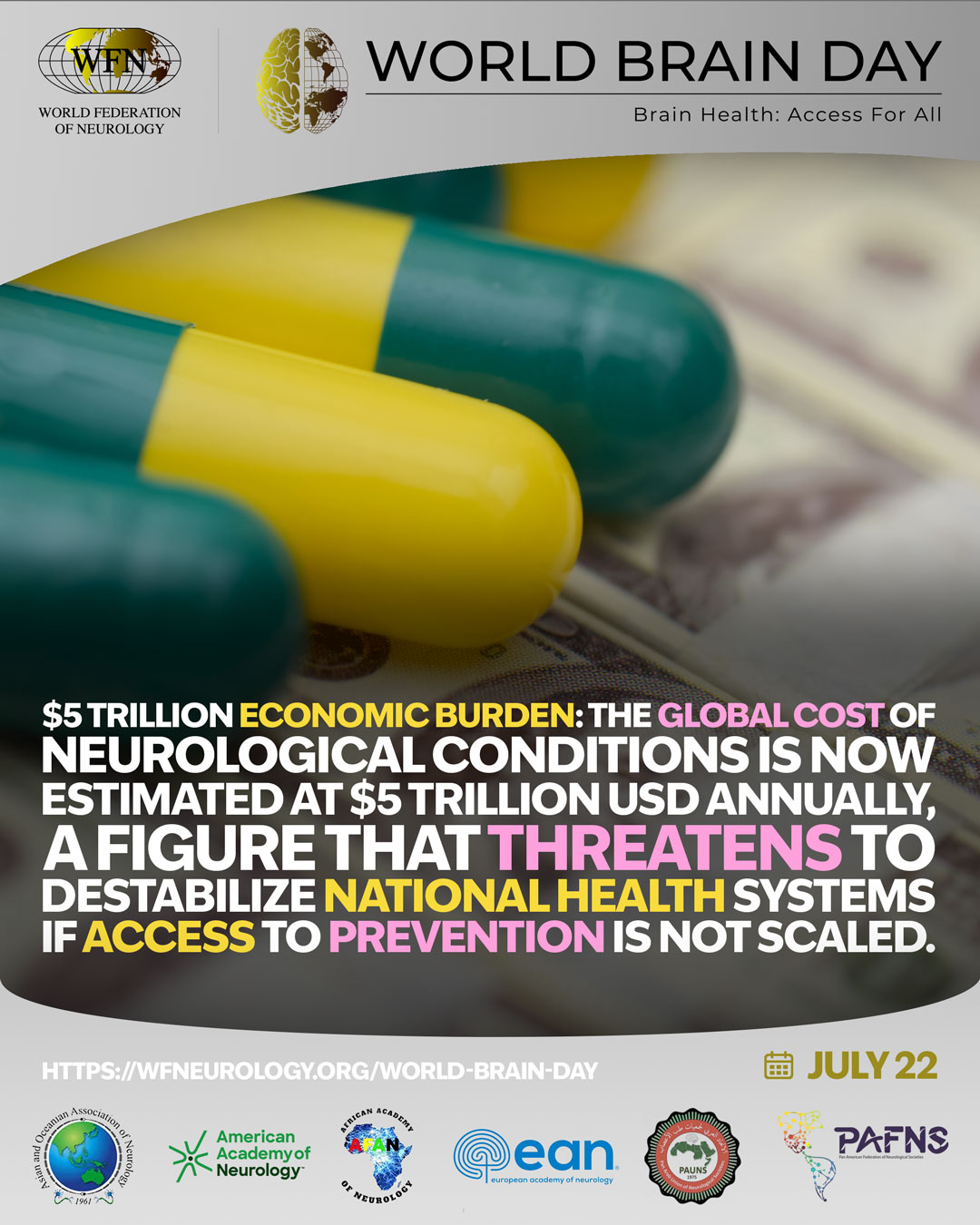
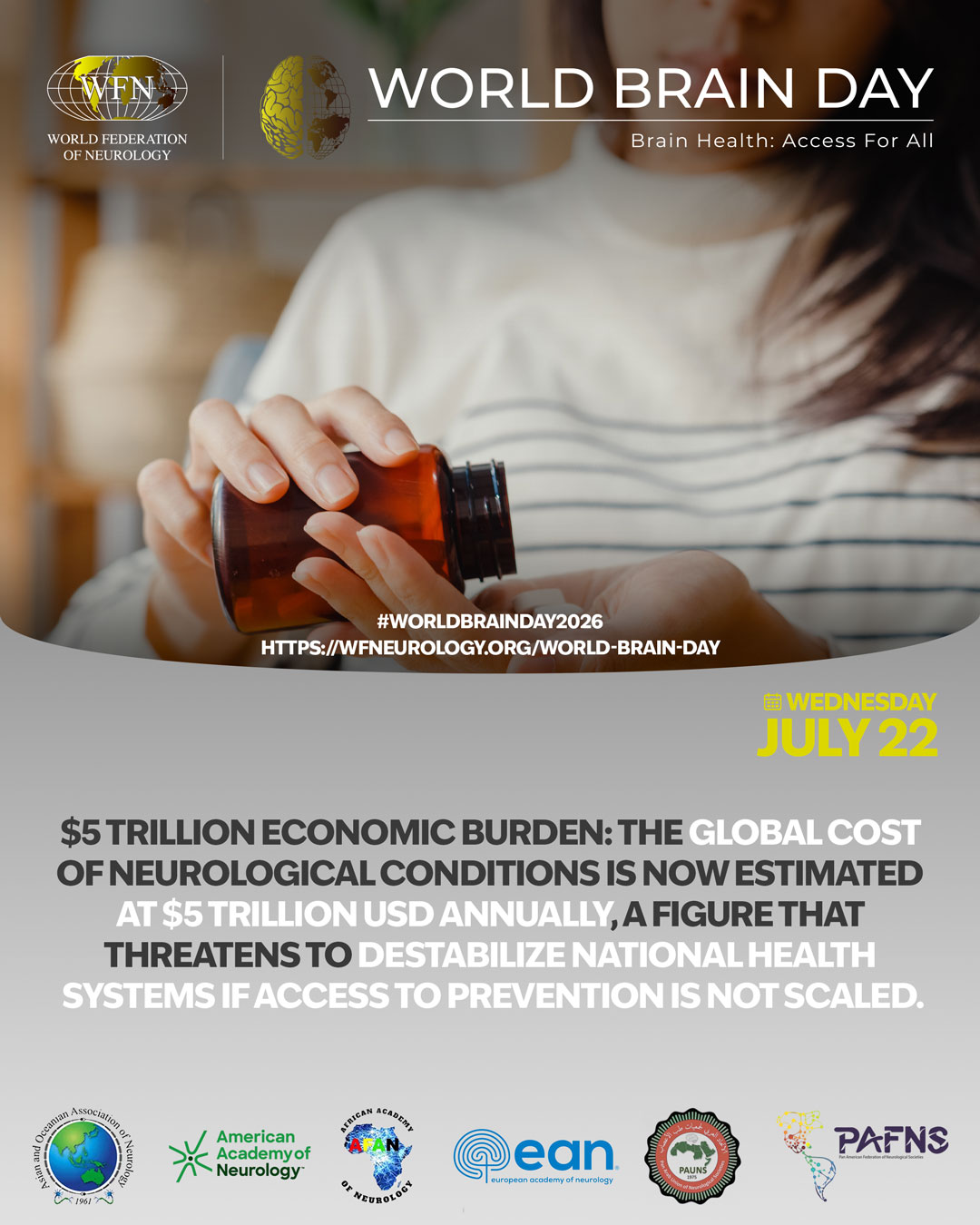
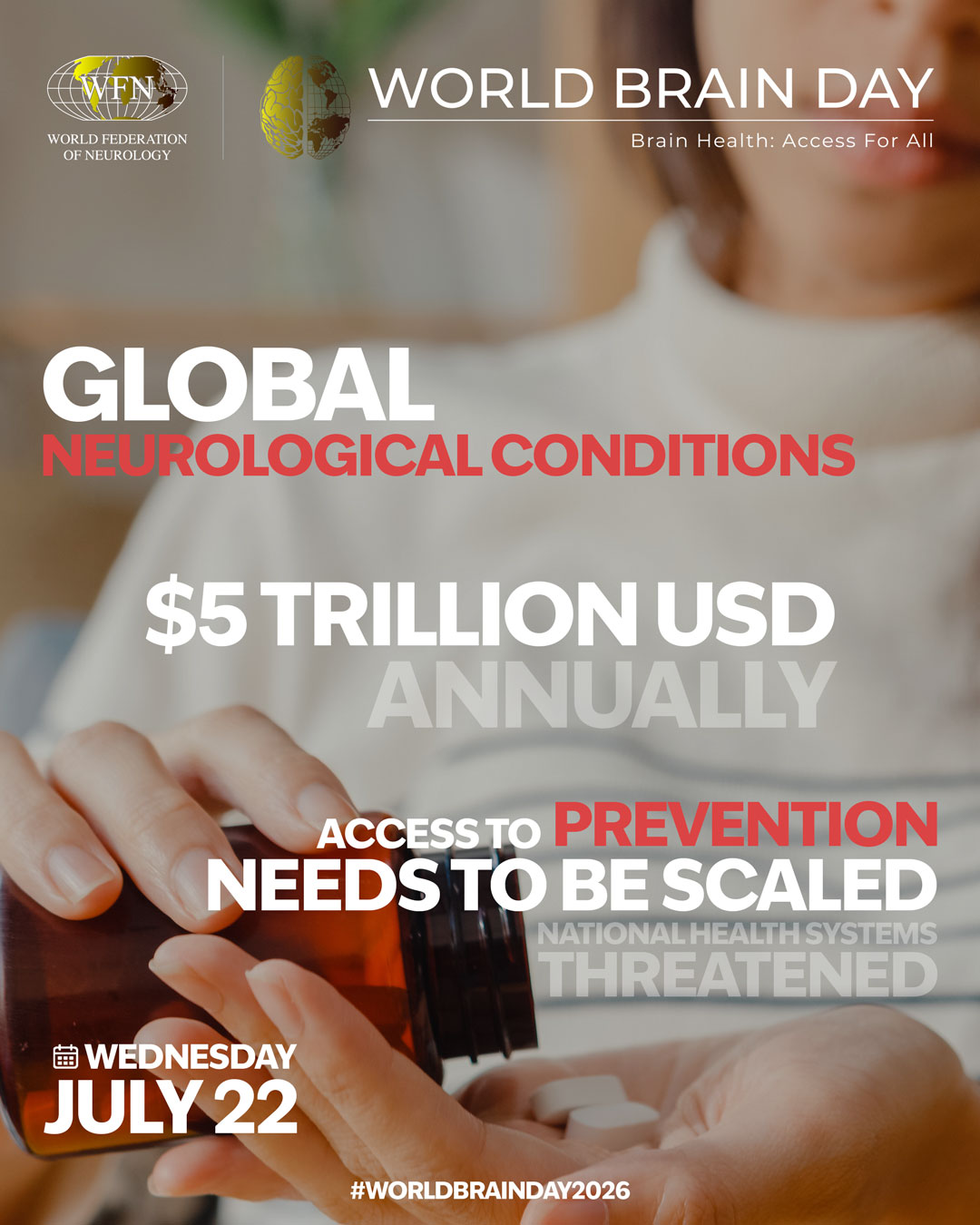
Instagram / XNeurological conditions cost the global economy $5 trillion USD every year, putting a heavy strain on national healthcare systems. Investing in prevention can help reduce these costs. 📉 Join the critical discussion at our free World Brain Day webinar on 22 July 2026. Register now: wfneurology.org/world-brain-day #WorldBrainDay #AccessForAll #HealthEconomics #PublicHealth LinkedIn / FacebookNeurological conditions impact the global economy by $5 trillion USD every year, creating a major strain on national healthcare systems. Expanding preventative care is essential to managing these rising costs. Prioritizing brain health is a vital economic and humanitarian priority. Register for the official World Brain Day webinar on 22 July 2026 to see how health policies can shift from managing crises to improving preventative access. ➡️ Register here: wfneurology.org/world-brain-day-webinar-registration ℹ️ Campaign Details: wfneurology.org/world-brain-day #WorldBrainDay #HealthEconomics #PublicHealth |
Poster 6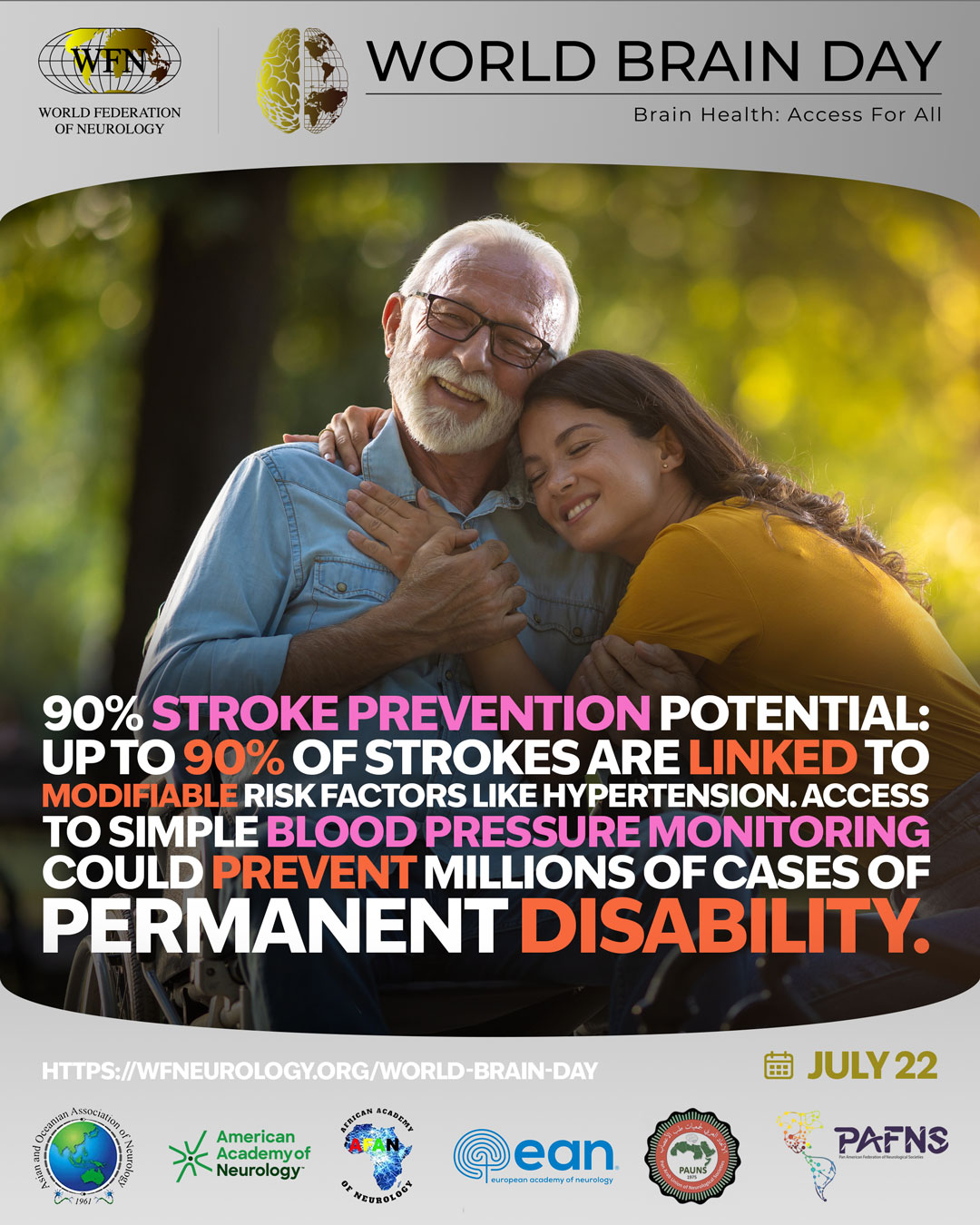
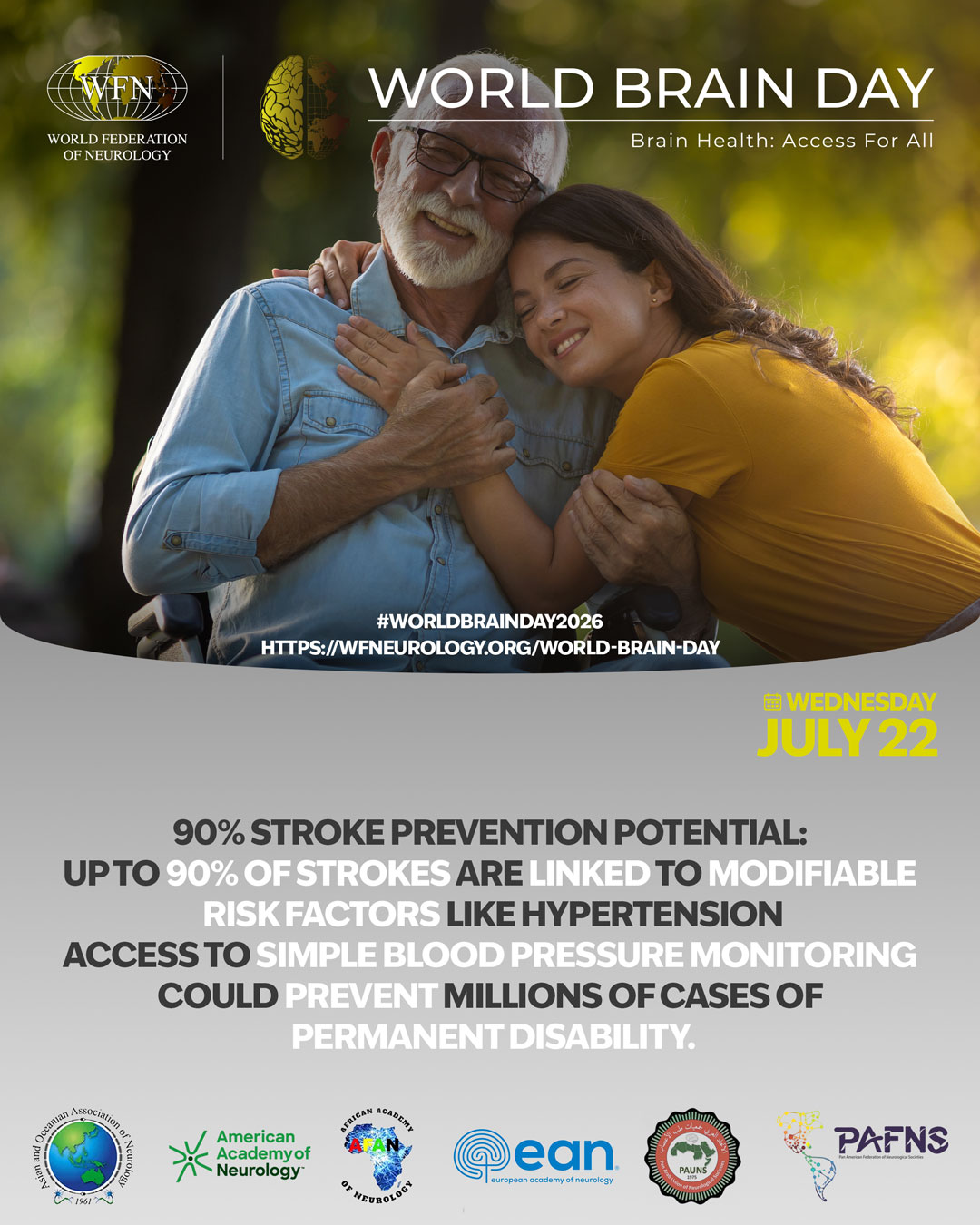
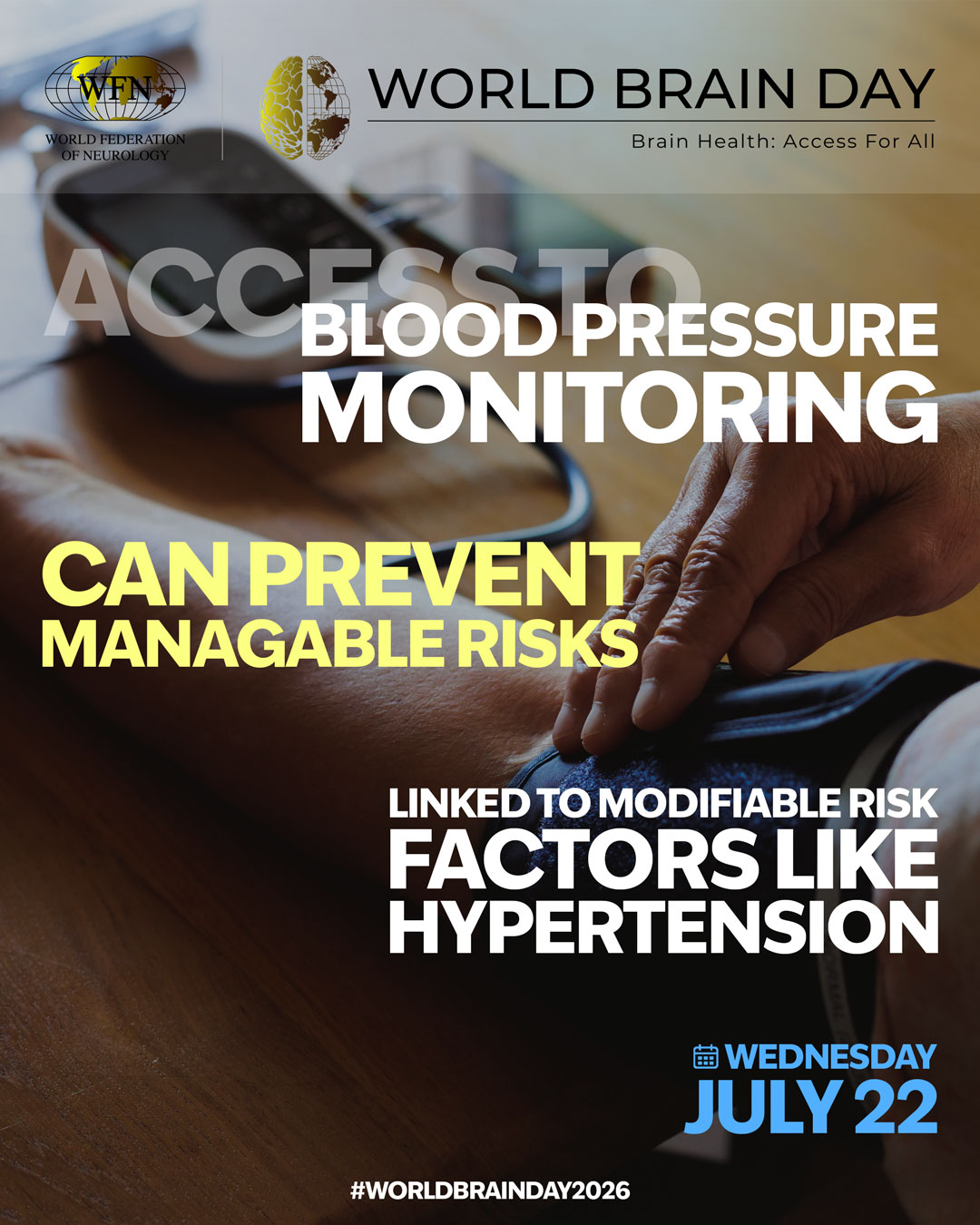
Instagram / XUp to 90% of strokes can be prevented by managing risk factors like high blood pressure. Simple checking tools can help protect millions of people from lasting health issues. 🩺 Learn how countries are scaling prevention on World Brain Day, 22 July 2026. Register for our free webinar at wfneurology.org/world-brain-day #WorldBrainDay #AccessForAll #StrokePrevention #Hypertension LinkedIn / FacebookUp to 90% of strokes can be prevented by managing common health factors like high blood pressure. Yet, stroke remains a main cause of long-term disability. Access to simple, routine blood pressure checks could prevent millions of cases worldwide. Early prevention is the first step toward access to care for everyone. Join global health leaders on World Brain Day, 22 July 2026, for our free webinar to learn how we can bring preventative screening to communities in need. ➡️ Register here: wfneurology.org/world-brain-day-webinar-registration ℹ️ Campaign Details: wfneurology.org/world-brain-day #WorldBrainDay #StrokePrevention #Hypertension |
Poster 7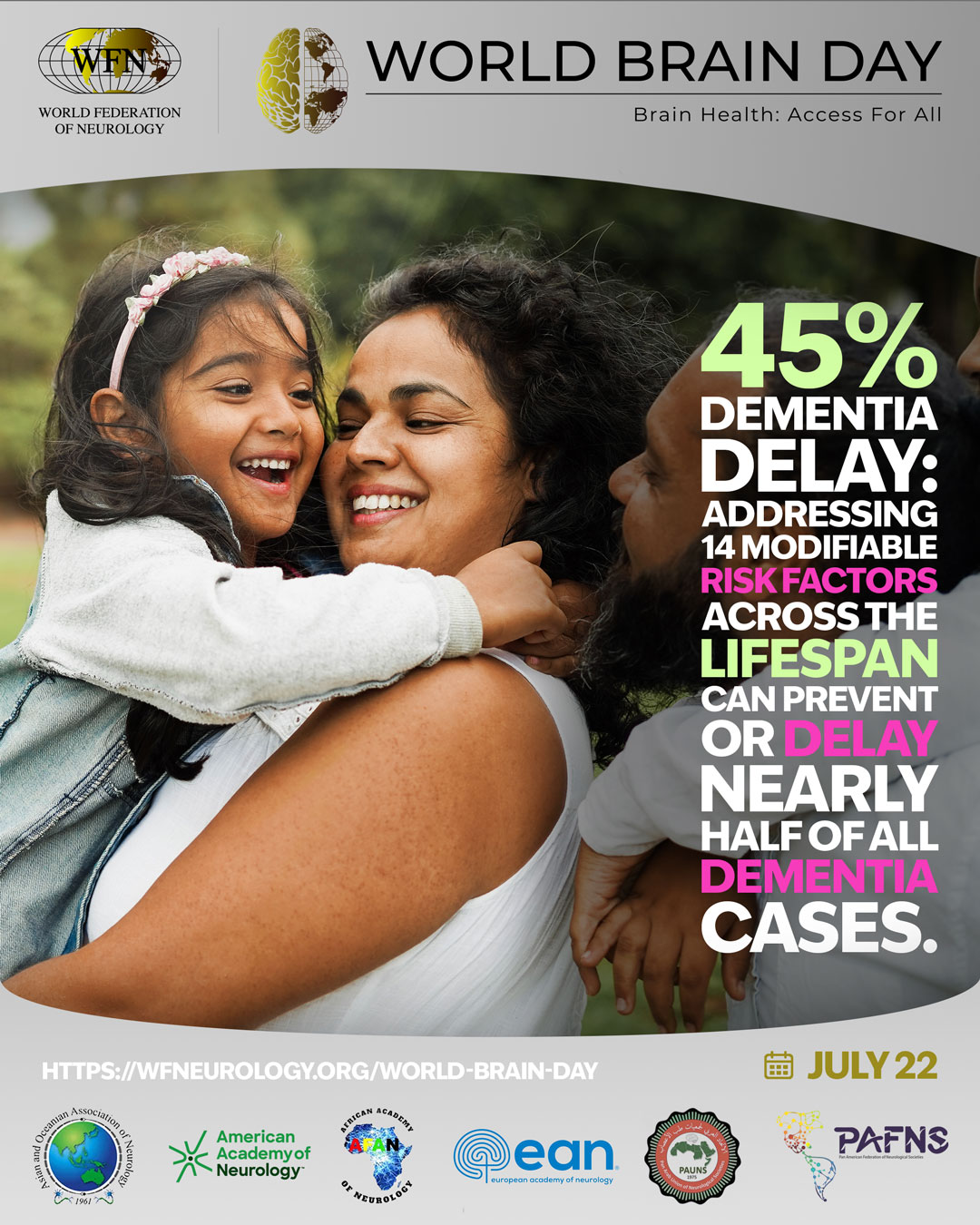
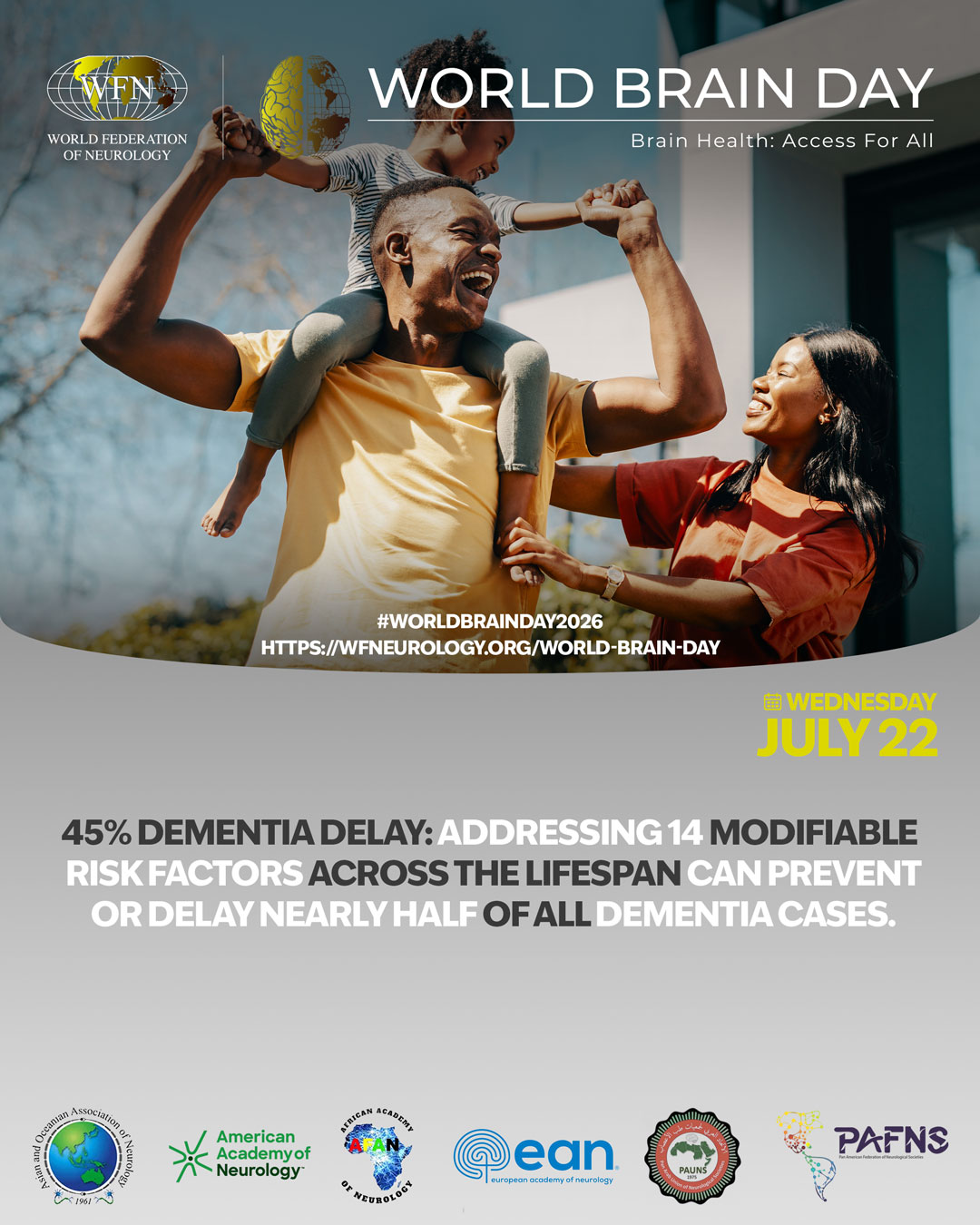
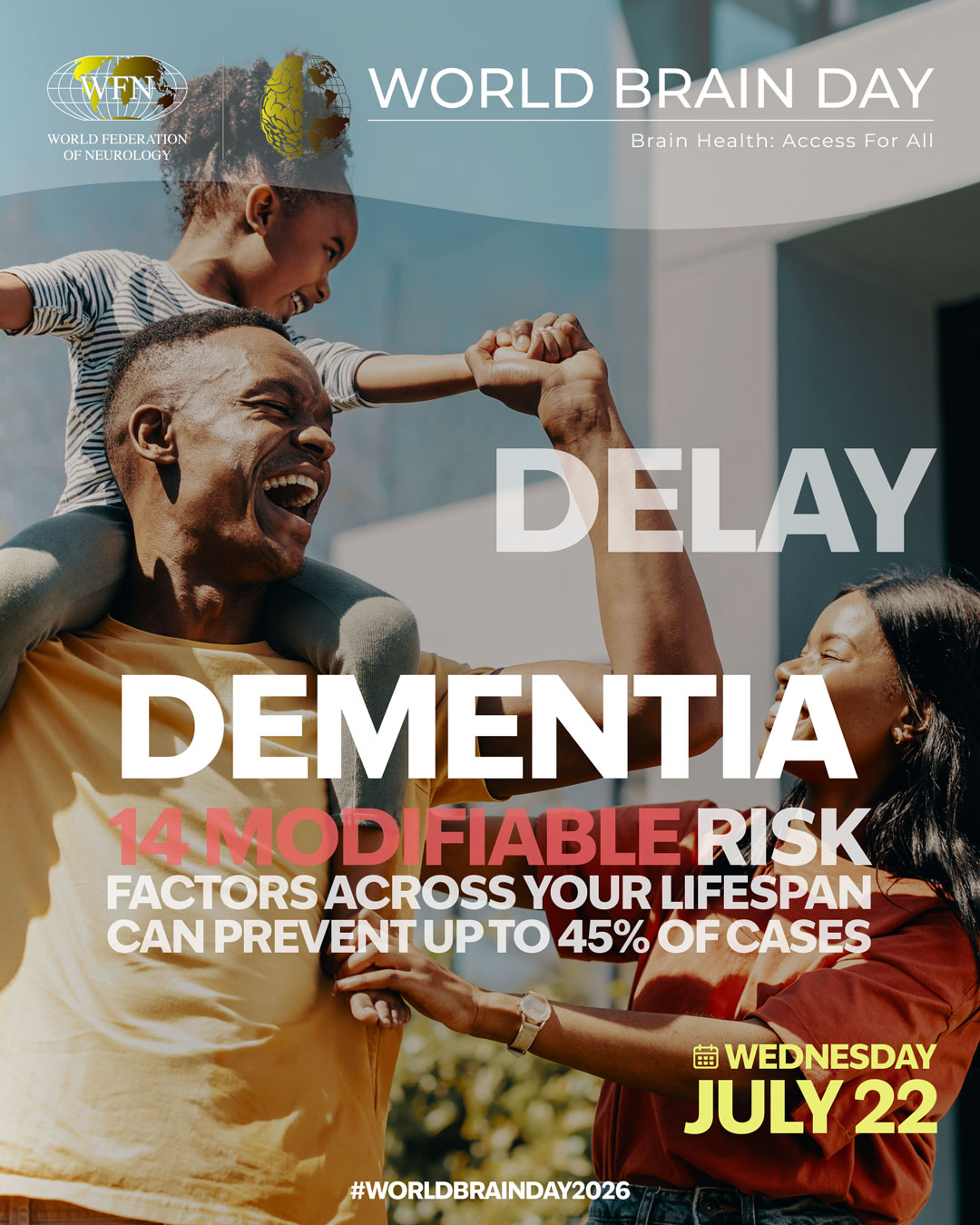
Instagram / XWe can prevent or delay nearly half of all dementia cases by managing 14 common health and lifestyle factors throughout our lives. Access to brain health care is important at every age. 🧠 Don't miss the official World Brain Day webinar on 22 July 2026. Register for free! Learn more: wfneurology.org/world-brain-day #WorldBrainDay #AccessForAll #DementiaPrevention #HealthyAging LinkedIn / FacebookDid you know that managing 14 common health and lifestyle factors throughout our lives can prevent or delay 45% of dementia cases? Supporting brain health requires continuous, fair access to healthy environments, education, and early healthcare from childhood onward. Join our global webinar this World Brain Day on 22 July 2026 to hear the latest updates on proactive prevention strategies. ➡️ Register here: wfneurology.org/world-brain-day-webinar-registration ℹ️ Campaign Details: wfneurology.org/world-brain-day #WorldBrainDay #DementiaPrevention #HealthyAging |
Poster 8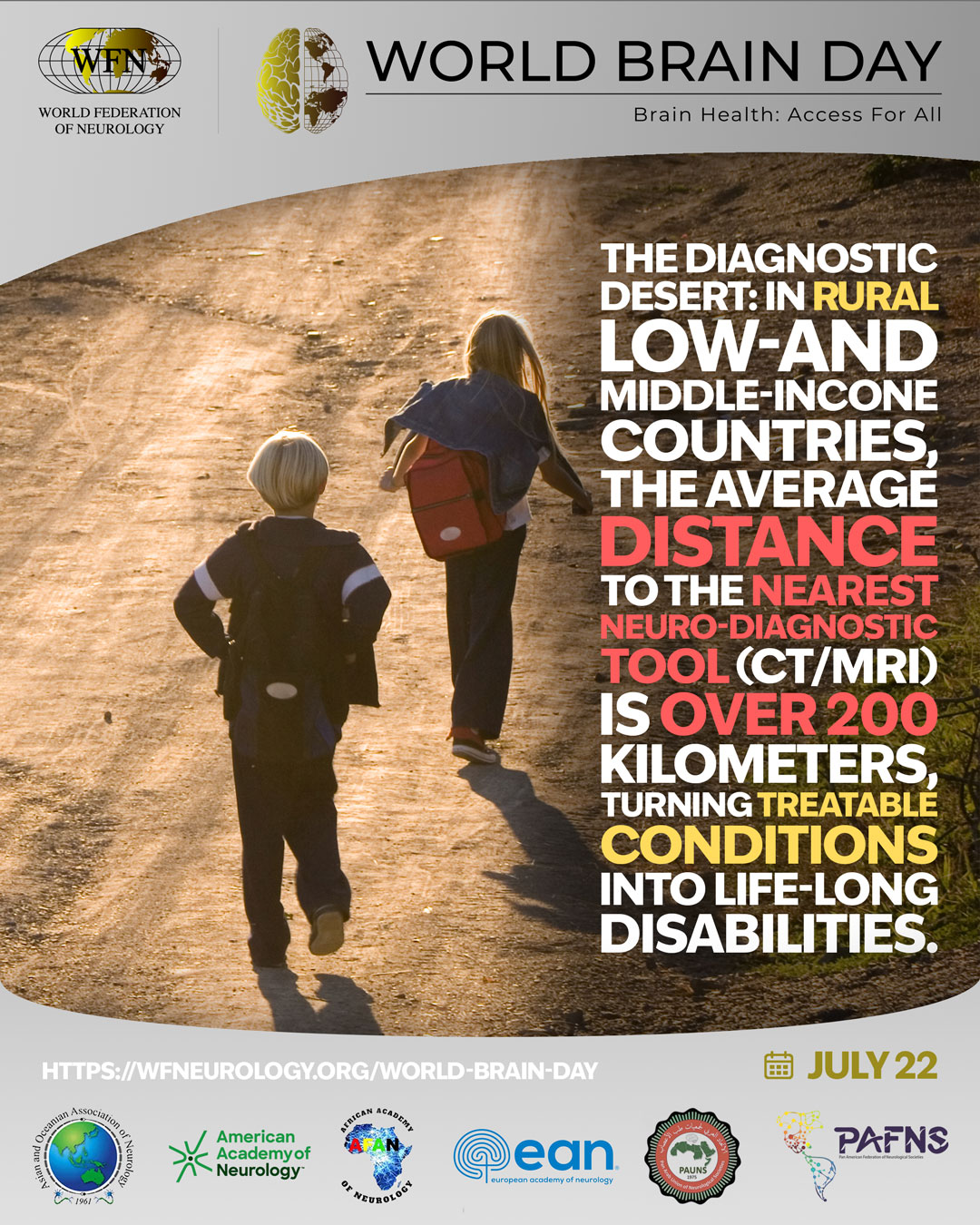
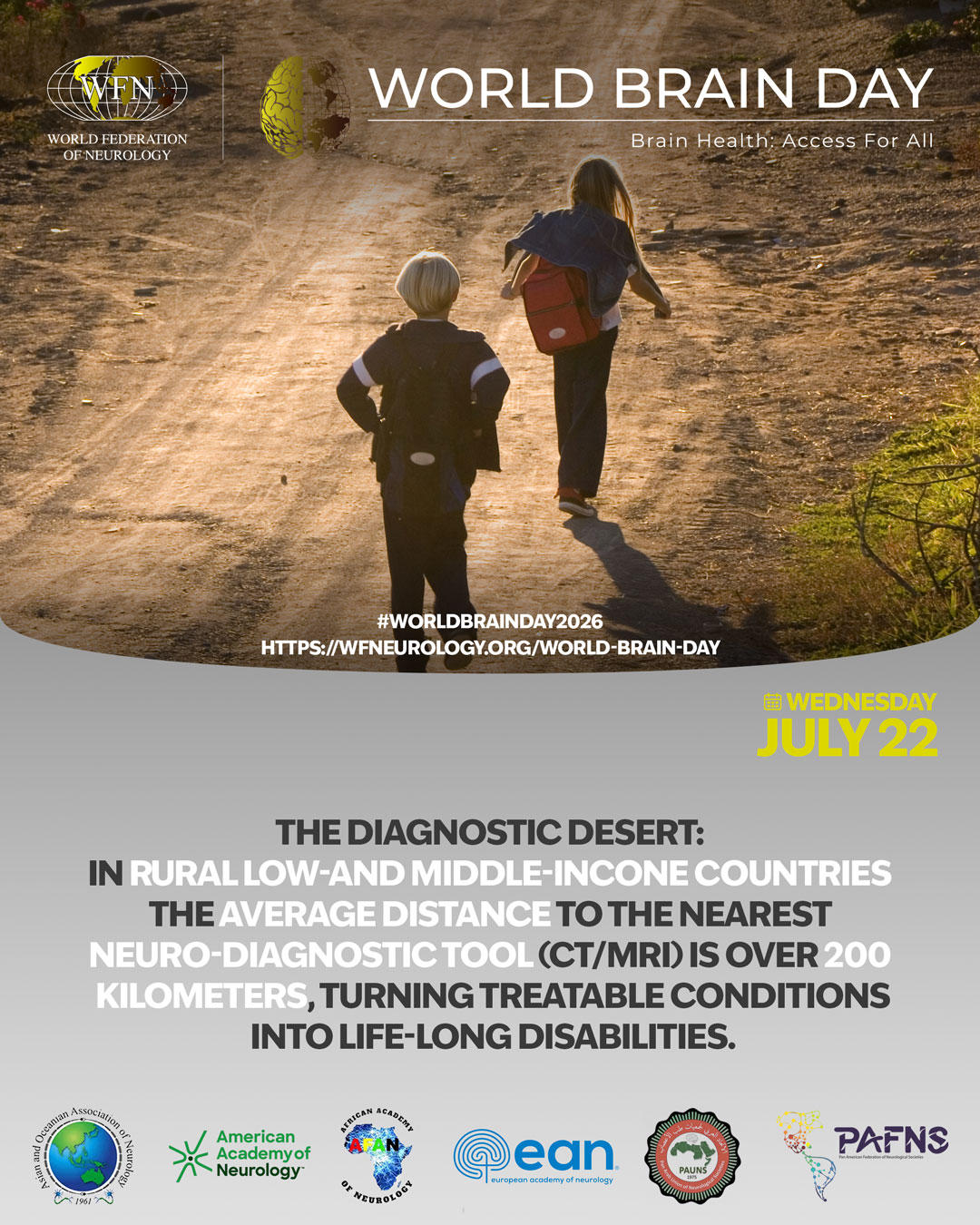
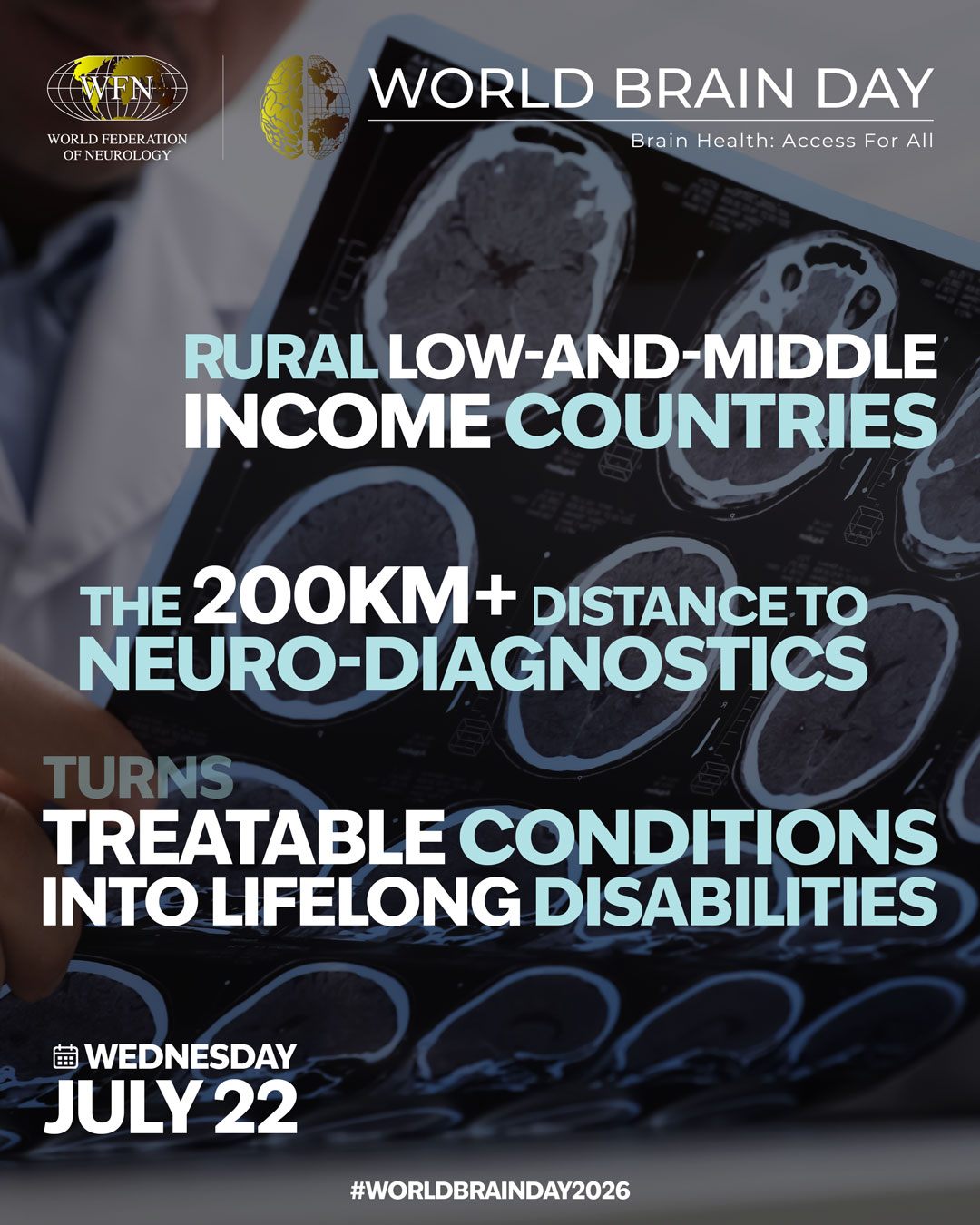
Instagram / XIn many rural, low-income areas, the nearest brain scan (CT or MRI) is more than 200 kilometers away. Long travel distances should not prevent people from getting treated for manageable conditions. Register for the free World Brain Day webinar on 22 July 2026 to learn more: wfneurology.org/world-brain-day #WorldBrainDay #AccessForAll LinkedIn / FacebookIn many rural, low- and middle-income regions, patients must travel an average of over 200 kilometers just to get basic brain scans, such as a CT or MRI. These long distances often delay care, which can turn treatable conditions into long-term disabilities. This World Brain Day, 22 July 2026, let's advocate for bringing medical technology closer to local communities. Register for our free public webinar to learn how dirferent regions are working toward fairer access to healthcare technology worldwide. ➡️ Register here: wfneurology.org/world-brain-day-webinar-registration ℹ️ Campaign Details: wfneurology.org/world-brain-day #WorldBrainDay #RuralHealthcare #MedTech #AccessForAll |
Poster 9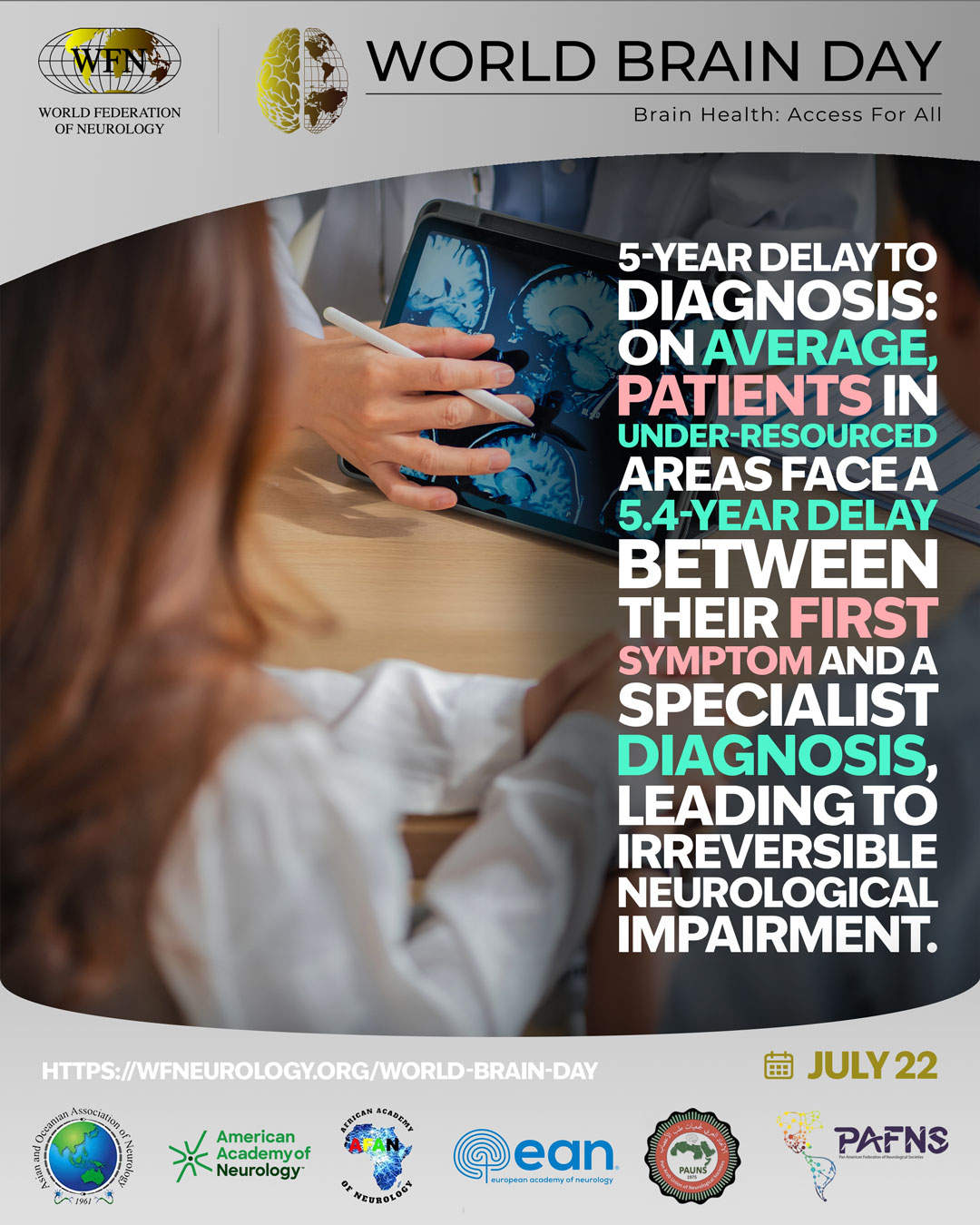
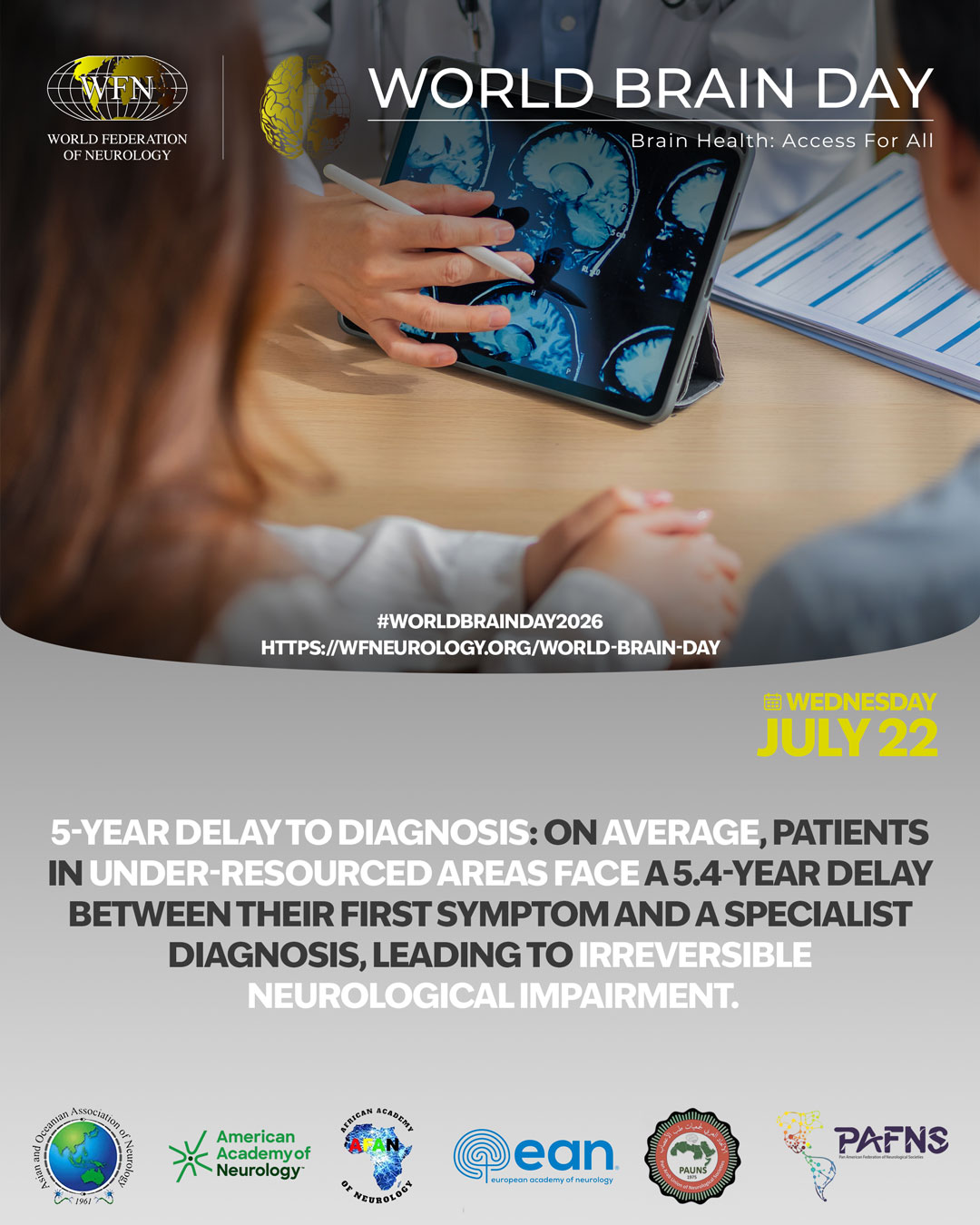
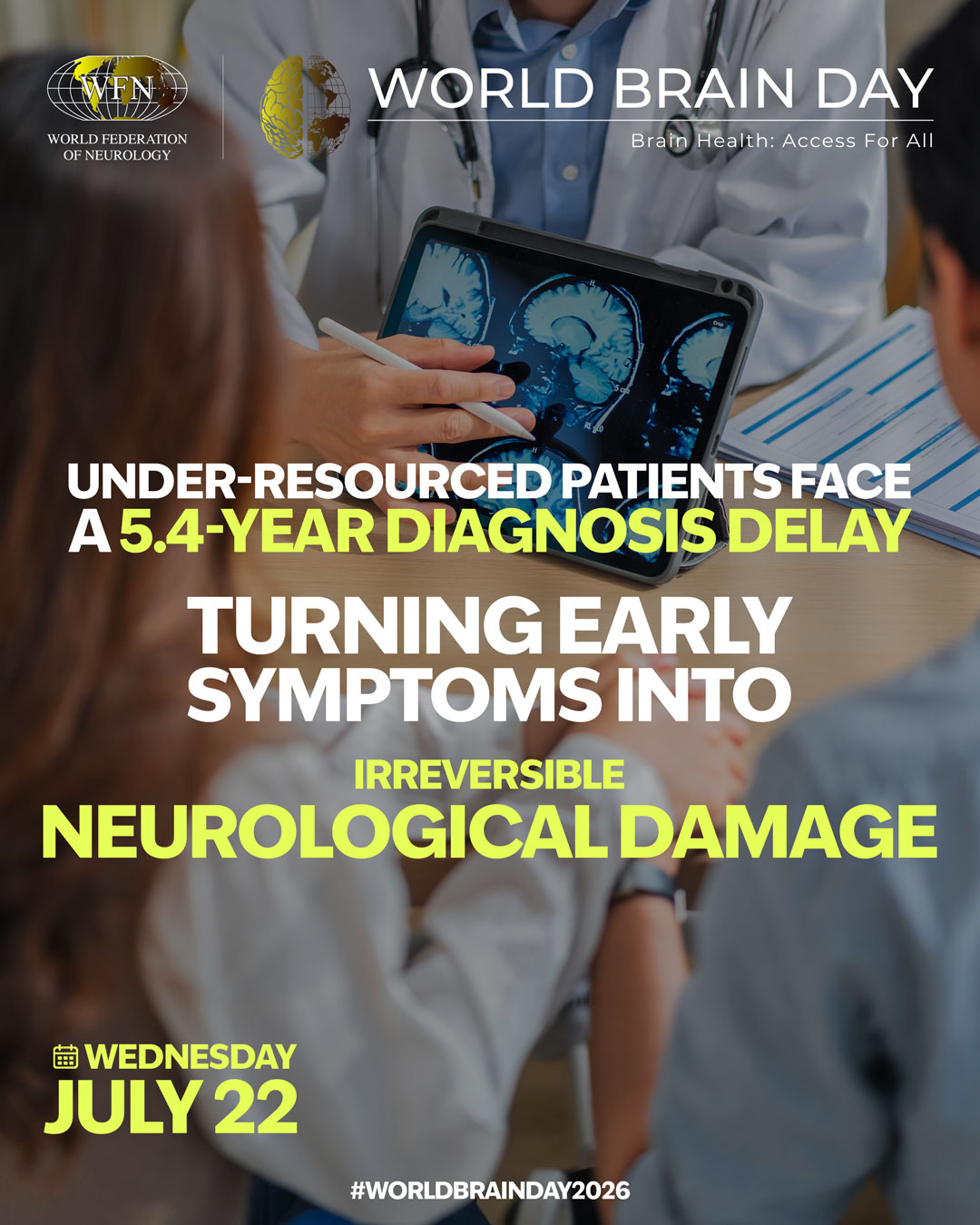
Instagram / XPatients in lower-income areas face an average delay of 5.4 years between their first symptom and a specialized neurological diagnosis. In neurological care, early diagnosis is critical to protecting brain health. ⏳ Join our free World Brain Day webinar on 22 July 2026 to learn more: wfneurology.org/world-brain-day #WorldBrainDay LinkedIn / FacebookAn average delay of 5.4 years between a patient's first neurological symptom and an accurate specialist diagnosis can cause long-term health problems. Shortening this timeline requires supporting frontline health workers and improving how patients are sent to specialists. On World Brain Day, 22 July 2026, we are calling for improvements in healthcare systems to guarantee timely care. Register for our free webinar to explore how we can support earlier treatment worldwide. ➡️ Register here: wfneurology.org/world-brain-day-webinar-registration ℹ️ Campaign Details: wfneurology.org/world-brain-day #WorldBrainDay #EarlyIntervention #Neurology #TimeIsBrain |
Poster 10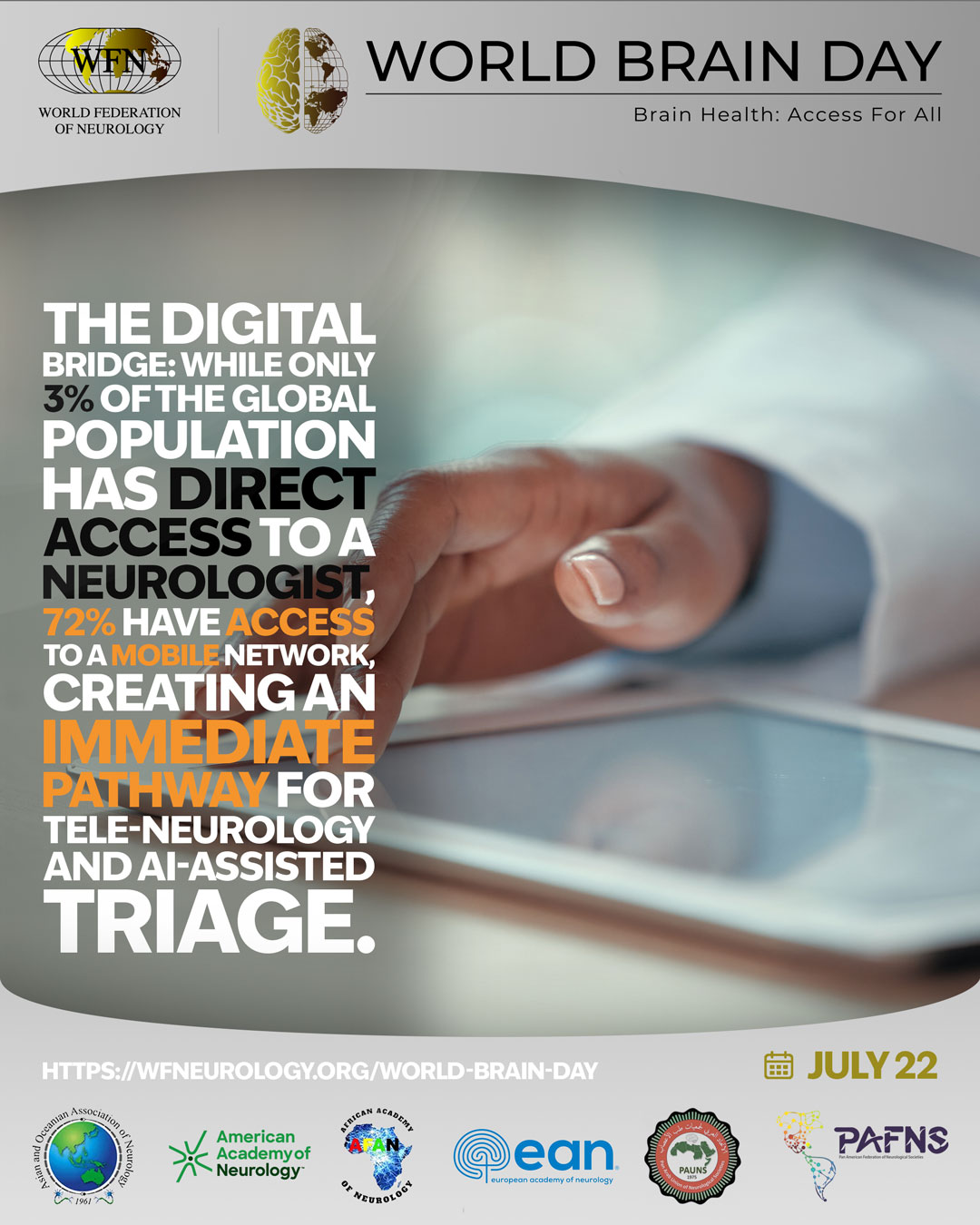
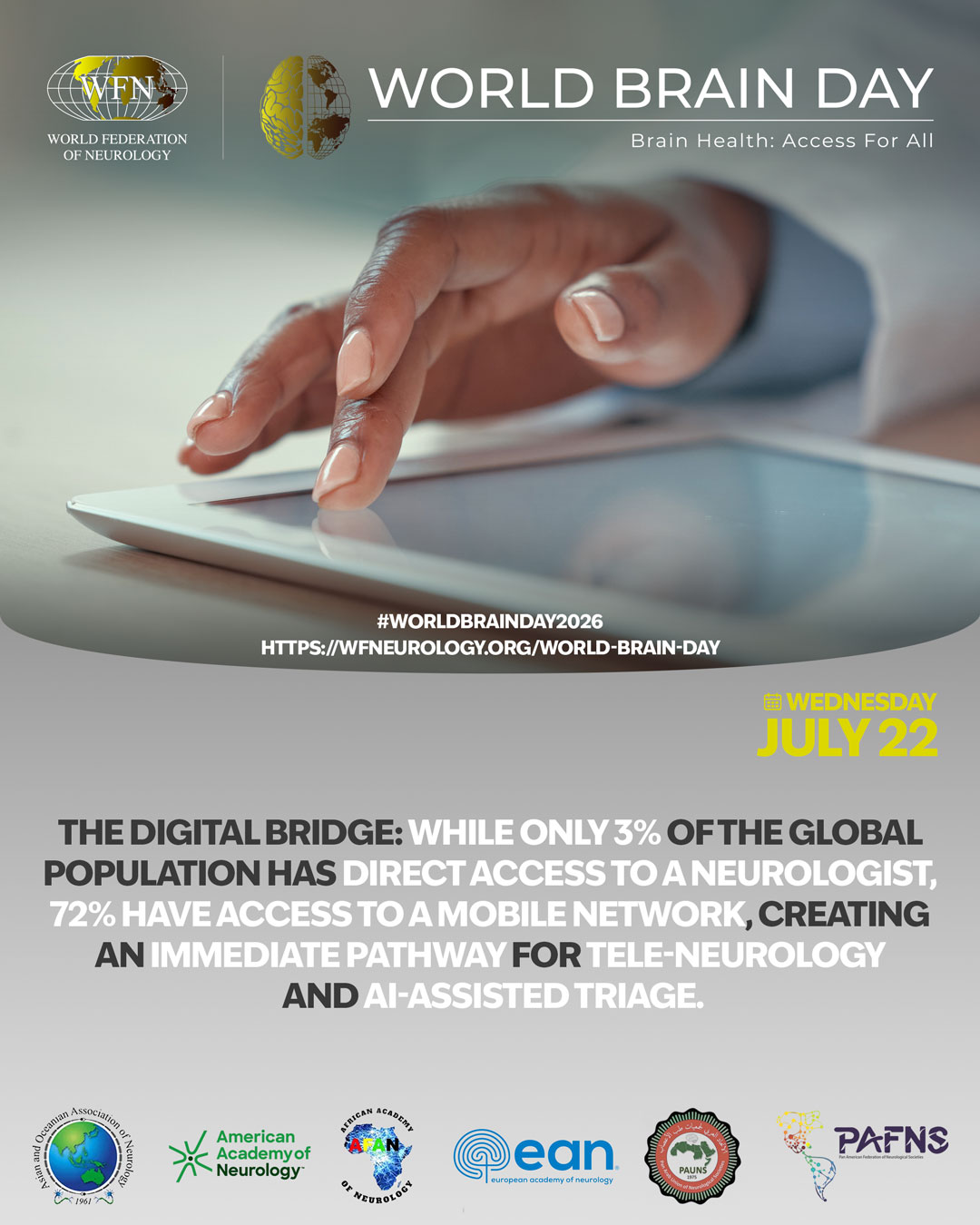
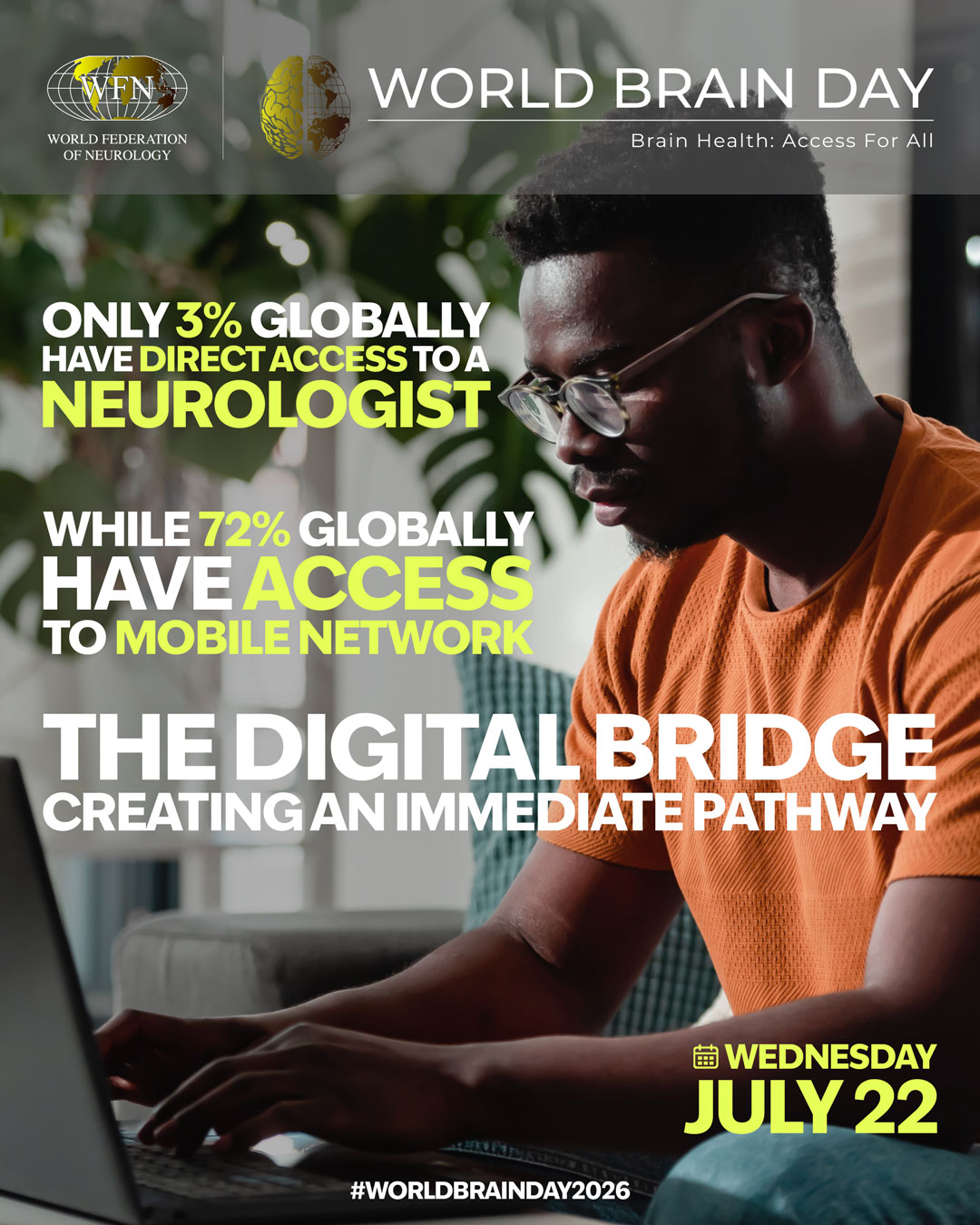
Instagram / XOnly 3% of people worldwide can easily see a brain specialist, but 72% have access to a mobile phone network. Online medical care (tele-neurology) can quickly help bring fair healthcare to more people. 📱 Learn how digital health has the potential to expand care at our free World Brain Day webinar on 22 July 2026: wfneurology.org/world-brain-day #WorldBrainDay LinkedIn / FacebookWhile there are not enough medical specialists in person, technology offers a clear way forward. Only 3% of people worldwide have direct access to a neurologist near them—yet 72% have a mobile network connection. By using remote medical care (tele-neurology), we can overcome travel barriers and deliver expert care directly to communities that need it most. Join the conversation at our free World Brain Day webinar on 22 July 2026 to see how digital health is helping make healthcare accessible to everyone. ➡️ Register here: wfneurology.org/world-brain-day-webinar-registration ℹ️ Campaign Details: wfneurology.org/world-brain-day #WorldBrainDay #DigitalHealth #Telemedicine |
Poster 11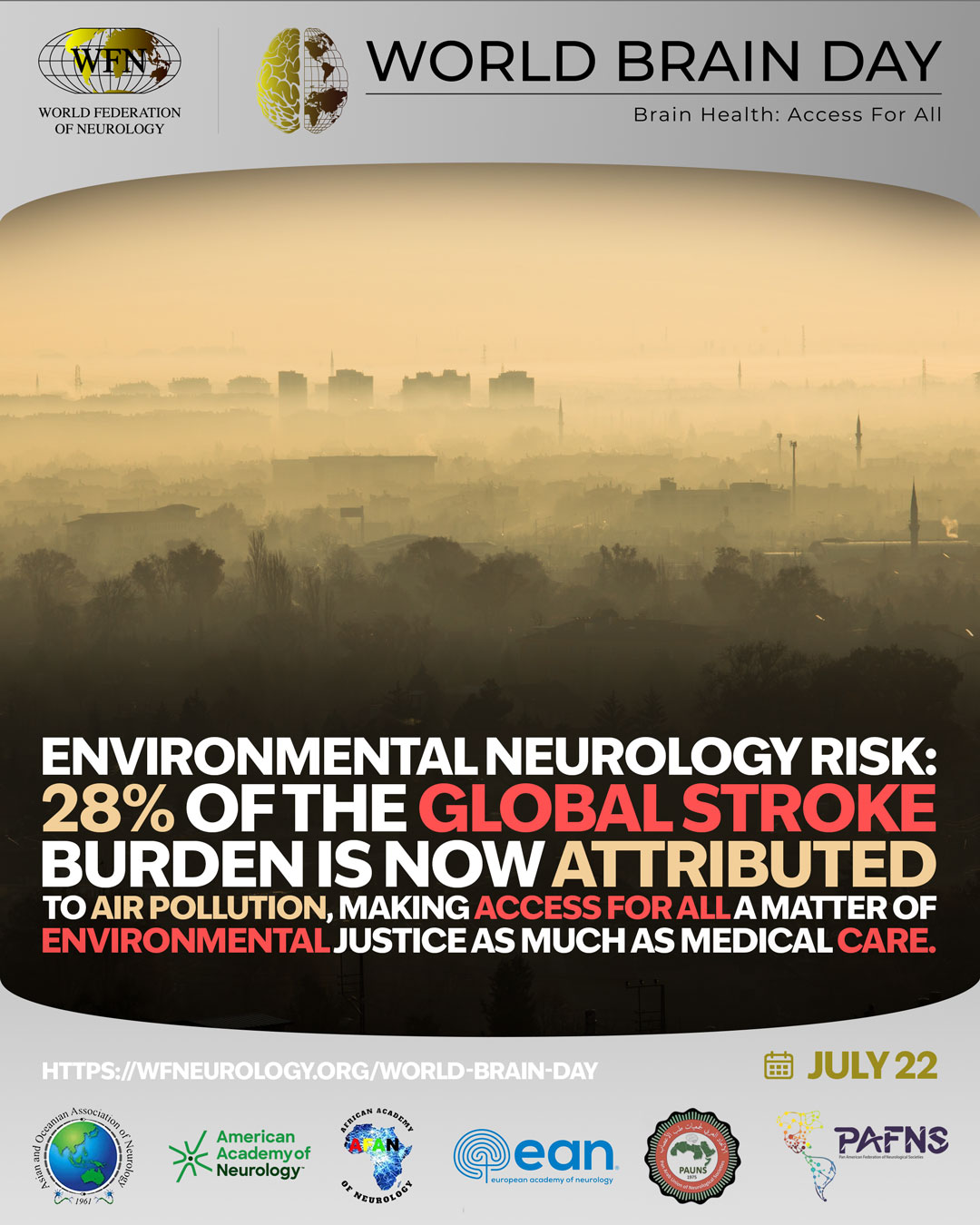
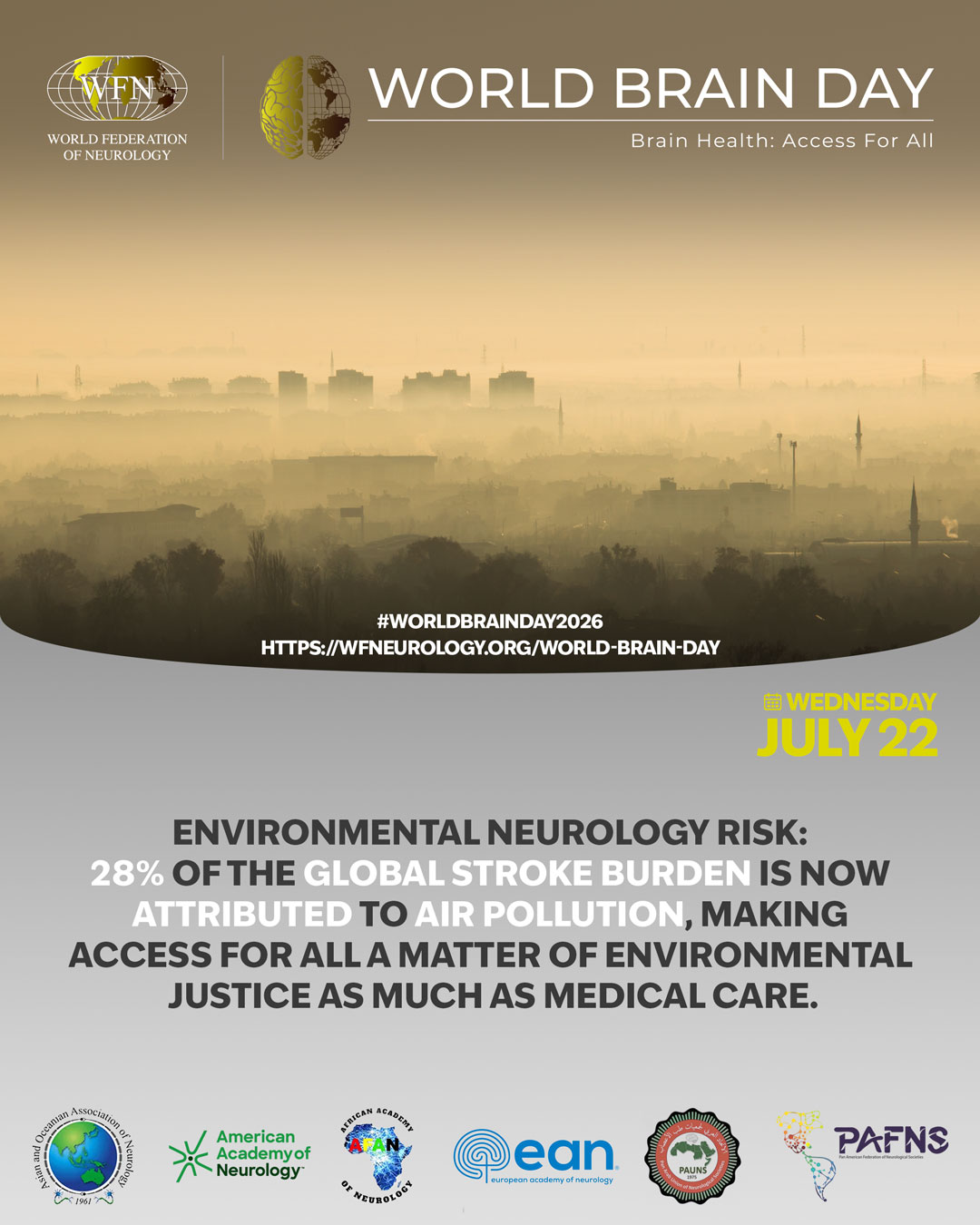 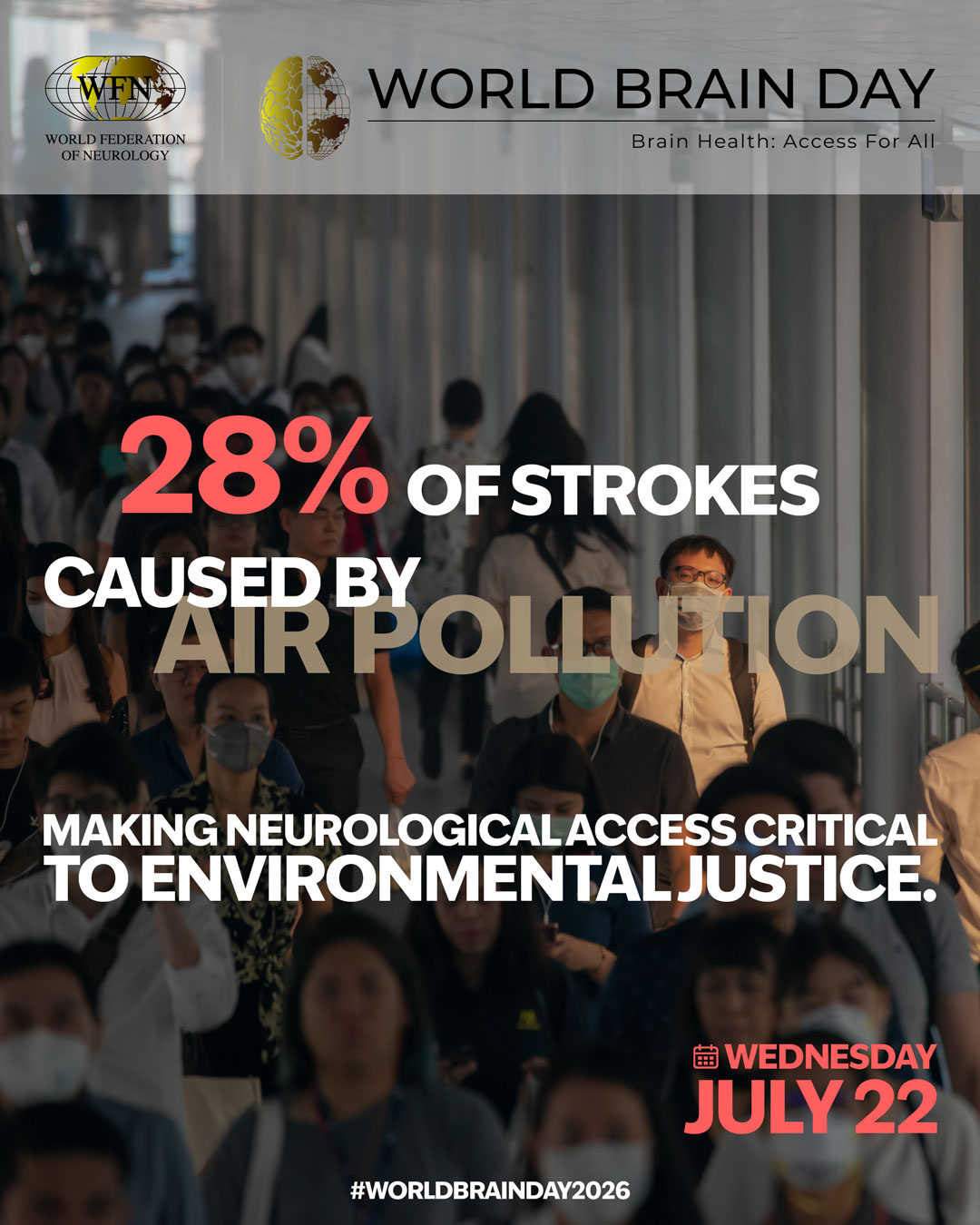
Instagram / XClean air is essential for brain health, as 28% of the global stroke burden is attributed to air pollution. Ensuring access to clean air is a matter of basic fairness and health equality. 🍃 Join our free World Brain Day webinar on 22 July 2026 to hear more: wfneurology.org/world-brain-day #WorldBrainDay LinkedIn / FacebookOur environments heavily influence our brain health. Because 28% of the global stroke burden is attributed to air pollution, providing health access means looking beyond medical clinics to support clean air and health equality. This World Brain Day, 22 July 2026, join the World Federation of Neurology for a free webinar exploring how environmental policy connects to brain health. ➡️ Register here: wfneurology.org/world-brain-day-webinar-registration ℹ️ Campaign Details: wfneurology.org/world-brain-day #WorldBrainDay #EnvironmentalHealth #CleanAir |
Poster 12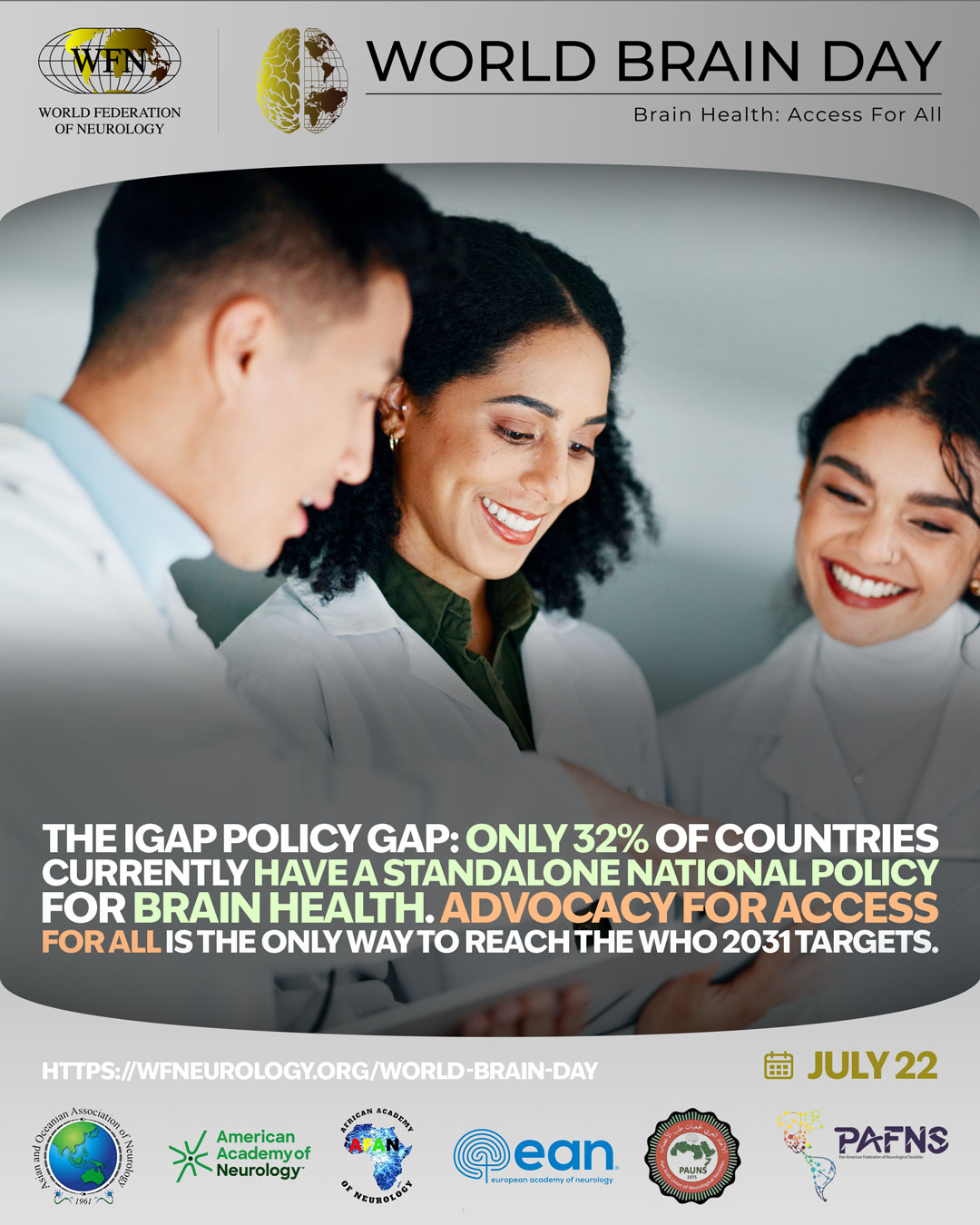
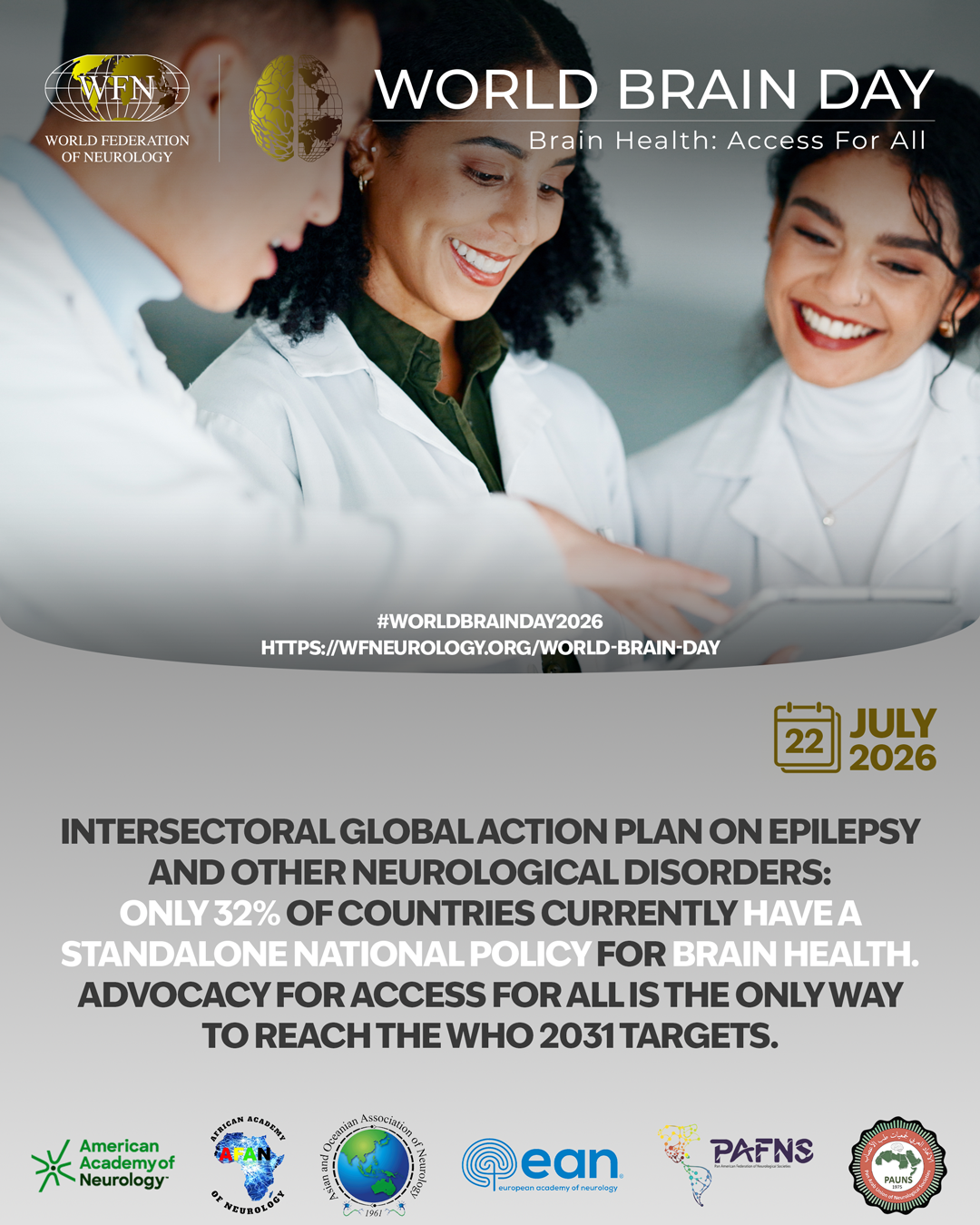
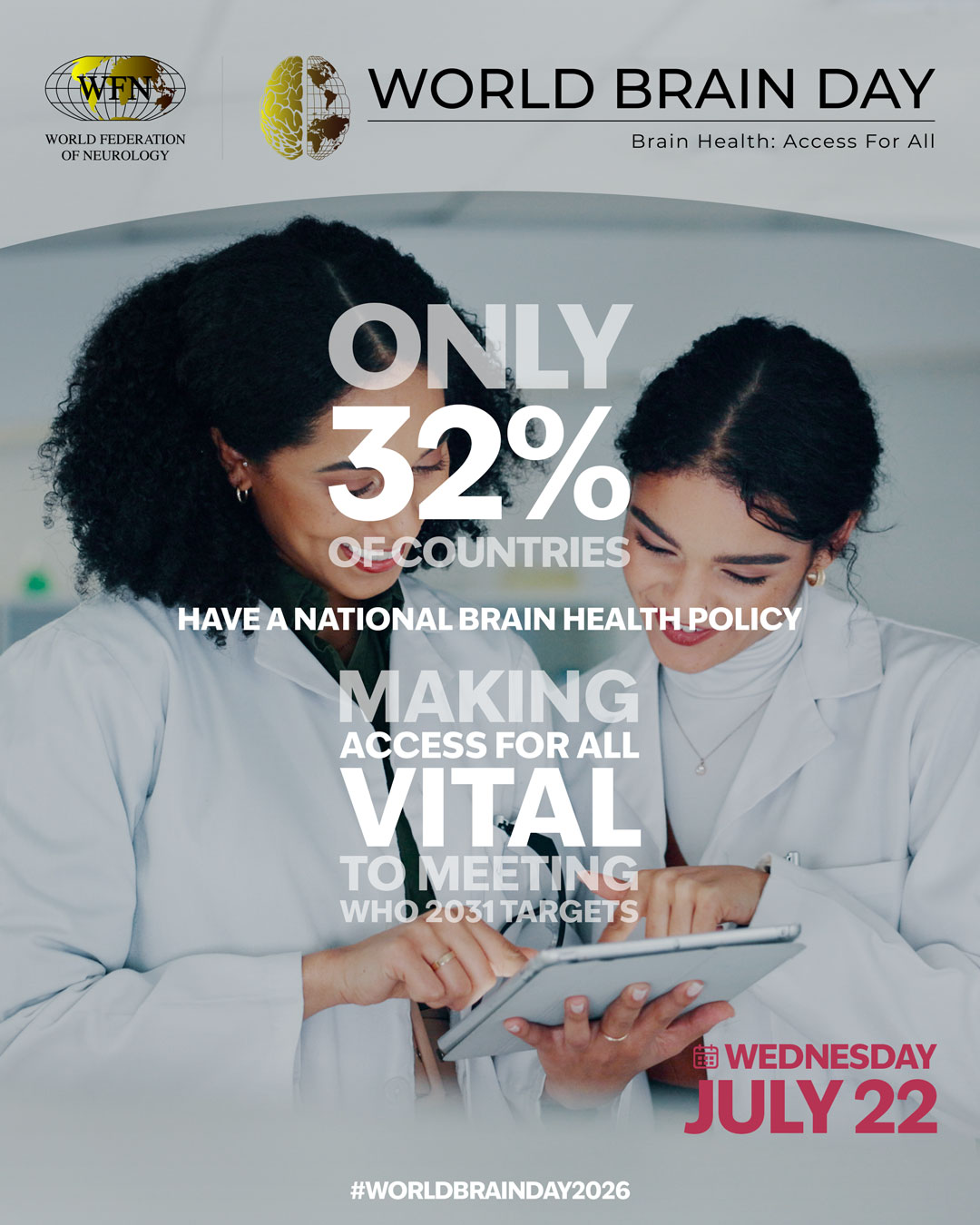
Instagram / XOnly 32% of countries have a specific national plan for brain health. Increasing public support and policy work are essential to help meet the World Health Organization (WHO) targets for 2031. 📋 Supporting national policies is essential to help bring brain healthcare to communities worldwide. Register for the free World Brain Day webinar on 22 July 2026 to hear from healthcare experts across the regions: wfneurology.org/world-brain-day #WorldBrainDay LinkedIn / FacebookThe Intersectoral Global Action Plan (IGAP) established important global targets for neurological care, but only 32% of countries currently have a specific national policy for brain health. Without these official national frameworks, healthcare funding and infrastructure often do not improve. Public support and policy work are essential to help turn health awareness into official laws. This World Brain Day on 22 July 2026, register for our free global webinar to learn how global regions are supporting brain health initiatives. ➡️ Register here: wfneurology.org/world-brain-day-webinar-registration ℹ️ Campaign Details: wfneurology.org/world-brain-day #WorldBrainDay #PublicPolicy #WHO #GlobalAction |



































Web design by Tribal Systems, built on Zenario